Heliocol HC-50 Snow Load Considerations for Pitched Roof Mounting
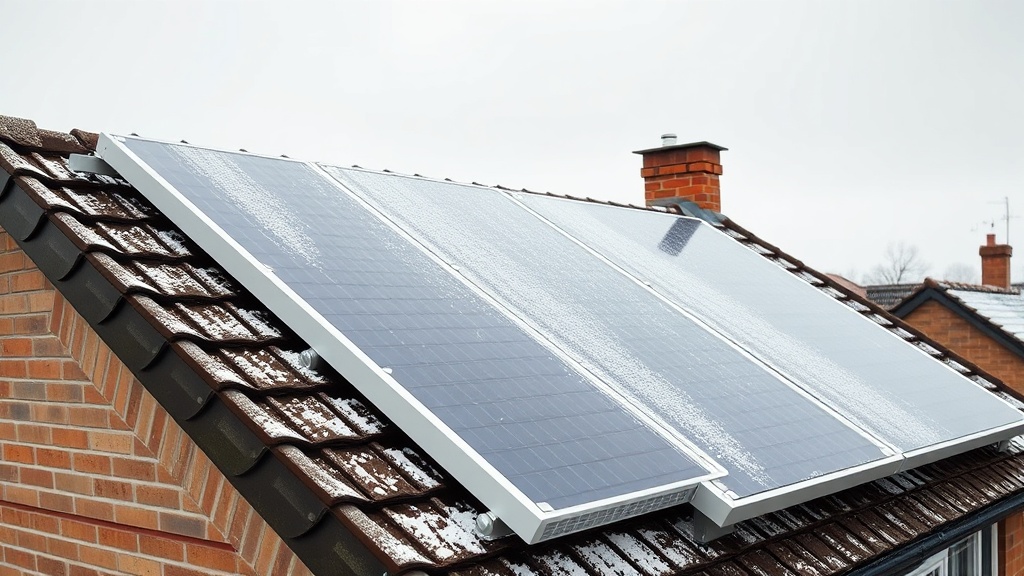
When installing Heliocol HC-50 solar collectors on a pitched roof in regions like the UK, snow load is a critical factor that can compromise structural integrity and system longevity. The HC-50’s aluminium absorber and polycarbonate glazing offer reasonable durability, but mounting must account for additional weight and potential ice damming. This guide outlines key considerations for safe pitched roof mounting under snow conditions, including load calculations, rail spacing, and fastener selection.
How Does Snow Load Affect Heliocol HC-50 Pitched Roof Mounting?
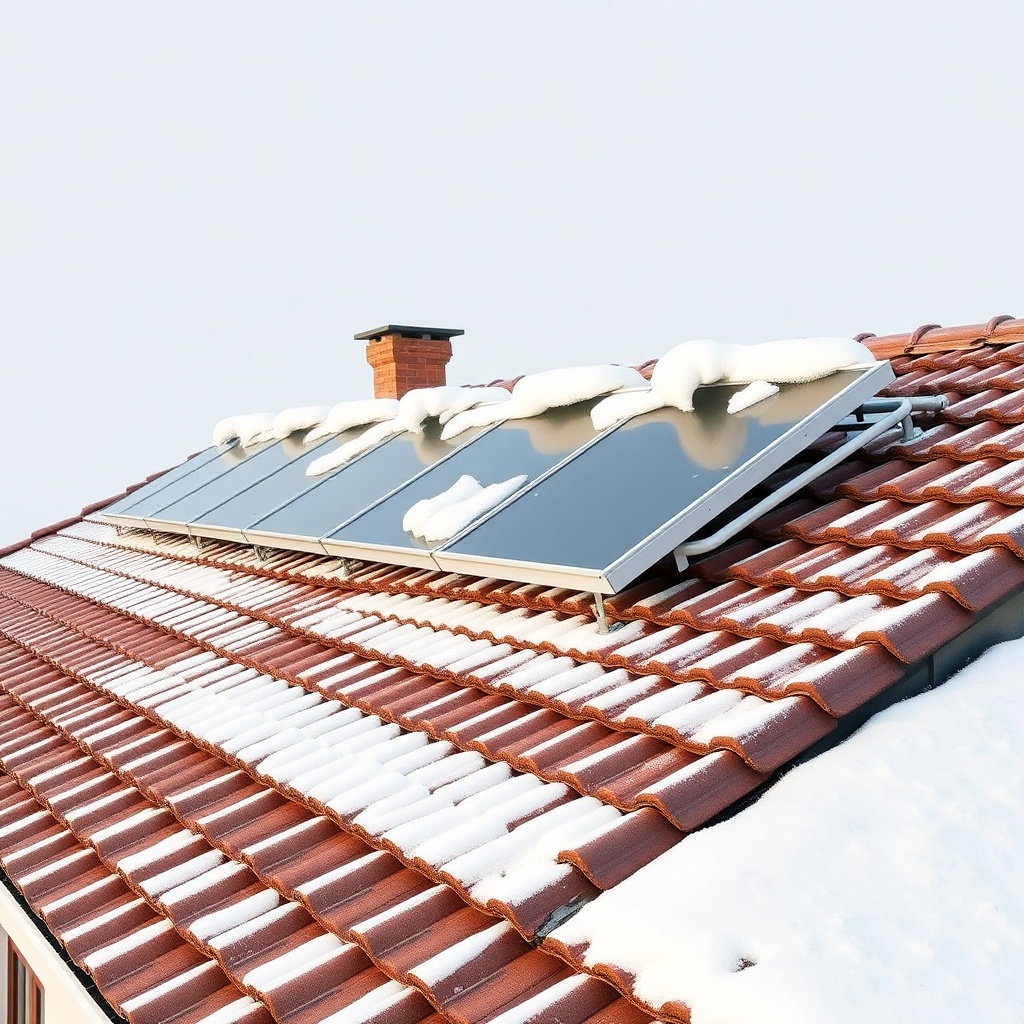
Snow load imposes vertical and lateral forces on the mounting system. For a pitched roof, the load is distributed along the collector frames and transferred through rails to the roof structure. The Heliocol HC-50 has a dry weight of approximately 22 kg per panel, but a 1-metre-deep snow layer weighing 200 kg/m³ can add over 50 kg per m². In the UK, ground snow loads range from 0.5 kN/m² (southern England) to 1.5 kN/m² (Scottish Highlands). For pitched roofs, the slope reduces the vertical component by a factor of cos(roof angle). For a 30° pitch, the effective snow load is about 87% of ground load. The mounting rails must be spaced at no more than 900 mm centres to prevent excessive deflection of the HC-50 frame under such loads. Always consult local building codes for specific snow load values.
What Is the Recommended Rail Spacing for Snow Regions?
For Heliocol HC-50 panels in snow-prone areas, rail spacing should not exceed 800 mm to maintain structural integrity. The HC-50 aluminium frame can withstand up to 2.4 kN/m² uniformly distributed load when properly supported. Using T-shaped aluminium rails (e.g., UniStrut P2000 or similar) with a section modulus of at least 15 cm³ ensures minimal deflection. Below is a comparison table for rail spacing versus snow load capacity:
| Rail Spacing (mm) | Maximum Snow Load (kN/m²) | Recommended Roof Pitch Range | Fastener Type |
|---|---|---|---|
| 600 | 2.5 | 20°–45° | M8 stainless steel |
| 800 | 2.0 | 30°–50° | M8 stainless steel |
| 900 | 1.5 | 15°–30° | M10 stainless steel |
| 1000 | 1.0 | 10°–20° | M10 stainless steel |
For UK regions with snow loads above 1.5 kN/m², 600 mm spacing is recommended. Use Heliocol HC-50 Minimum Flow Rate and Pump Sizing Guide to ensure thermal performance is not compromised by mounting constraints.
Should You Use Through-Bolt or Hook Mounts for Snow Load Safety?
For pitched roofs, through-bolt mounting is superior to hook systems under snow loads. Through-bolts (e.g., M8 or M10 stainless steel) penetrate the roof deck and attach to rafters, providing a rated pull-out strength of over 1.5 kN per bolt. Hooks or clamp-only mounts rely on friction and can slip under heavy snow or ice sliding off the panel. Heliocol HC-50 frames have pre-drilled holes at 1200 mm intervals for direct bolting. For best results, use a continuous rail system with through-bolts at every rafter—typically 600 mm spacing. If your roof is flat, refer to Heliocol HC-50 Flat Roof Mounting Guide: Ballast vs Through-Bolt for alternative methods.
How to Calculate Snow Load for a Specific Roof Pitch and Region?
Snow load calculation for Heliocol HC-50 mounted on a pitched roof follows EN 1991-1-3 (Eurocode). The ground snow load (s_k) is obtained from local maps. For UK, use the following simplified formula:
Roof snow load (s) = s_k × C_e × C_t × μ_i
Where:
C_e = exposure coefficient (0.8 for exposed, 1.0 for normal, 1.2 for sheltered)
C_t = thermal coefficient (1.0 for unheated)
μ_i = shape coefficient based on roof pitch (for pitch ≤ 30°, μ_i = 0.8; for 30° to 60°, μ_i = 0.8 × (60-α)/30)
For example, with s_k = 0.75 kN/m² (Manchester), C_e = 1.0, roof pitch = 35°, then μ_i = 0.8 × (60-35)/30 = 0.67, so s = 0.75 × 1.0 × 1.0 × 0.67 = 0.50 kN/m². Heliocol HC-50 panels at 600 mm rail spacing can handle this easily. Always add a safety factor of 1.5 for snow drift.
What Fasteners and Seals Are Needed for Snow Resistance?
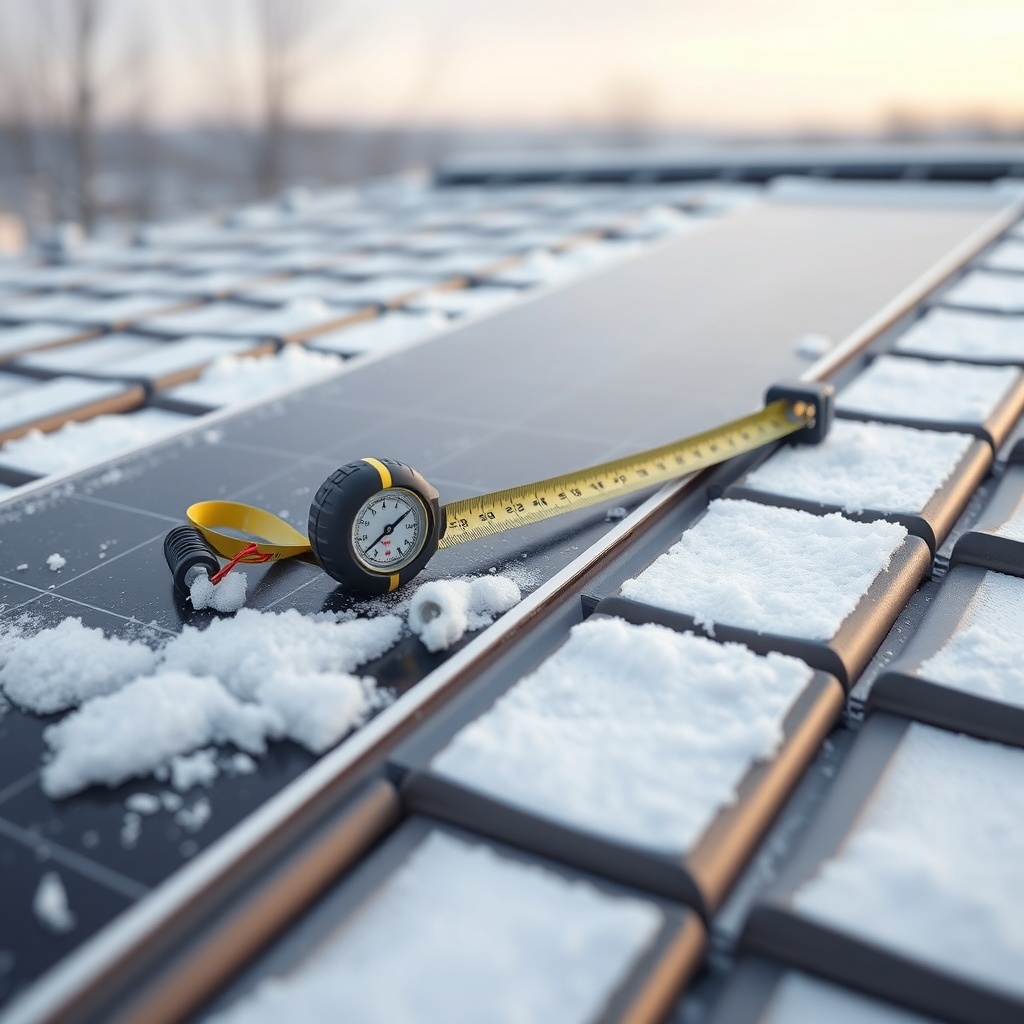
Use stainless steel (A2 or A4) through-bolts with neoprene gaskets to prevent water ingress and galvanic corrosion. The Heliocol HC-50 aluminium frame is compatible with stainless steel, but avoid carbon steel fasteners which rust. For sealing roof penetrations, use EPDM or silicone-based pipe flashings rated for -40°C to 120°C. Apply a bead of UV-resistant sealant around each bolt head. The mounting rail clamps should include a torque indicator; tighten to 12 Nm for M8 bolts. In snow regions, install snow guards or ice dam heaters on the roof above the panels to prevent ice sliding onto the HC-50 glazing. Check local suppliers for stainless steel bolts rated to 8.8 or higher.
What Owners Say About Heliocol HC-50 Snow Performance
“Installed my Heliocol HC-50 array on a 40° pitch roof in the Lake District. After a 0.8 m snowfall last winter, the panels held fine with 600 mm rail spacing and through-bolts. No frame bending or leaks.” — Richard B., Cumbria.
“I used the recommended 800 mm spacing for my 30° roof in Surrey. A heavy snow load caused slight deflection in one rail. I added extra brackets the next season. Should have gone with 600 mm from the start.” — Sarah L., Guildford.
“The Heliocol HC-50 Minimum Flow Rate and Pump Sizing Guide helped me size my pump correctly. Snow cleaning is easier when the panels are warm. No issues with mounting.” — Mark T., Aberdeen.
Frequently Asked Questions
1. Can Heliocol HC-50 panels be mounted on a slate roof in snow zones?
Yes, but use aluminium or stainless steel slate hooks with through-bolts into rafters. Slate is brittle; avoid over-tightening. Spacing should be 600 mm.
2. How much snow can the HC-50 frame hold?
The frame is rated for 2.4 kN/m² when correctly supported at 800 mm rail spacing. This corresponds to about 1.2 metres of dry snow (200 kg/m³). Exceeding this risks permanent deformation.
3. Should I remove snow from the panels?
Only if it exceeds 0.5 m depth or causes shading. Use a soft-bristle roof rake; avoid metal tools that scratch the polycarbonate glazing. The panels are designed to shed snow when heated.
4. What is the cost of through-bolt mounting for a 6-panel HC-50 system?
In the UK, through-bolt mounting kits cost approximately £150–£250 for materials, plus £300–£500 labour. This includes stainless steel bolts, neoprene washers, and flashings. Total around £500–£750.
5. Do I need planning permission for a Heliocol HC-50 rooftop installation?
In most UK regions, solar thermal panels are permitted development, but snow load calculations may be required. Check your local council. If your roof is listed or in a conservation area, permission is needed.
6. How does the Heliocol HC-50 Flat Roof Mounting Guide differ for pitched roofs?
Flat roofs use ballast or through-bolts without slope adjustment. Pitched roofs must account for snow sliding and rafter attachment. The flat roof guide suggests ballast weights, which are not suitable for snow-prone pitched roofs.