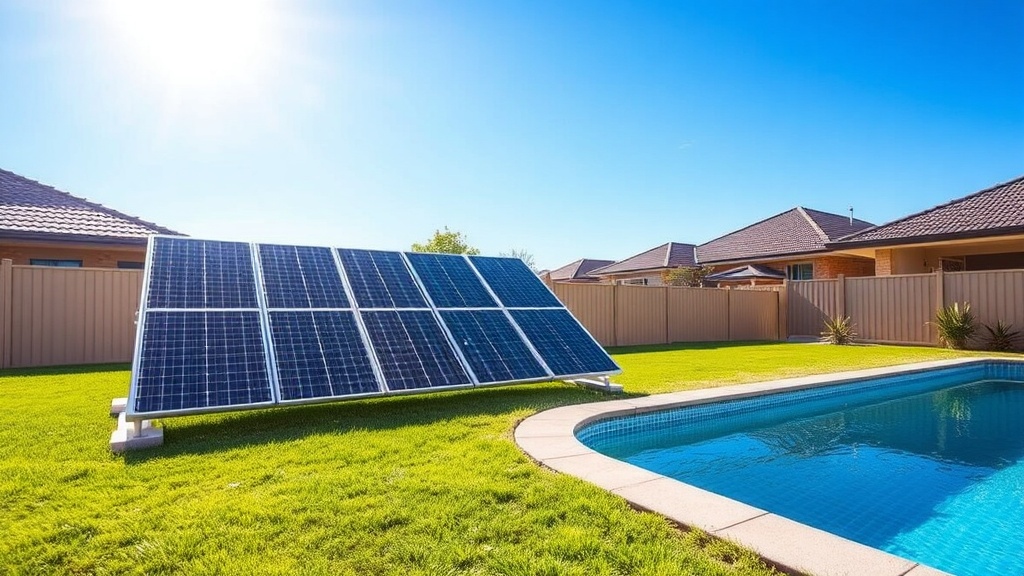
Is the SolarPoolPro Ground Mounting Guide Right for Your Installation?
When planning a solar pool heating system, the mounting method you choose directly impacts long-term stability, maintenance frequency, and overall system efficiency. The SolarPoolPro Ground Mounting Guide: Concrete Pavers vs Perforated Pipe breaks down two distinct approaches for securing collector arrays on lawn or bare earth, helping Australian homeowners make informed decisions tailored to their site conditions and budget. This guide draws on installer feedback and field performance data to clarify which mounting solution suits your project.
What Are the Key Differences Between Concrete Pavers and Perforated Pipe Mounting?
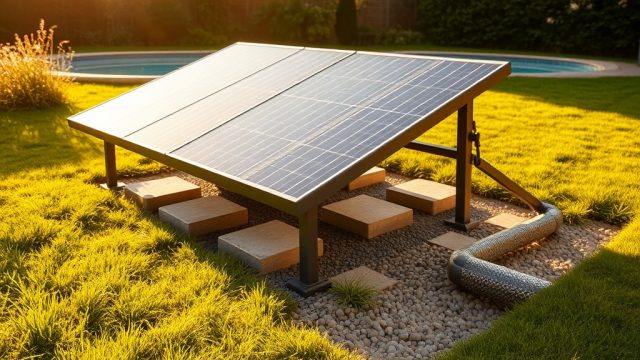
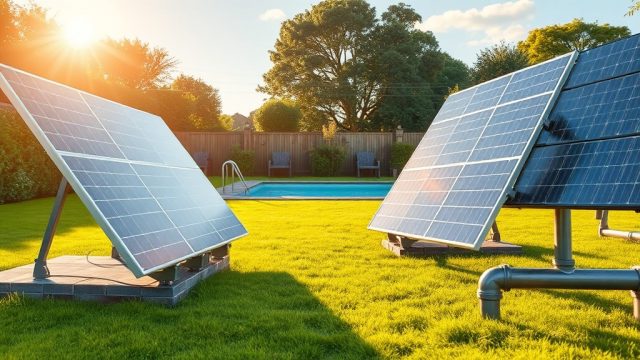
Concrete pavers serve as a ballasted base, relying on weight (typically 40–60 kg per square metre) to hold the array in place without penetrating the ground. Perforated pipe mounting, by contrast, uses galvanised steel or aluminium rails anchored with ground spikes or screw piles driven 300–600 mm deep, offering a more permanent structural bond. The table below summarises critical specifications side by side.
| Feature | Concrete Pavers (400x400x50 mm) | Perforated Pipe Mounting (Galvanised) |
|---|---|---|
| Base material | 40 MPa concrete, interlocking | HDG steel pipe, 50 mm diameter |
| Installation time (10-panel array) | 3–5 hours (with levelling) | 4–6 hours (includes driving spikes) |
| Ground penetration | None (surface ballast only) | 300–600 mm driven |
| Suitability for high wind zones | Moderate (Category N2) | High (Category N4) |
| Material cost (per panel, AUD) | A$28–A$42 | A$35–A$55 |
| Labour cost estimate (AUD) | A$180–A$260 (DIY: lower) | A$240–A$380 (requires tools) |
| Adjustability after install | Easy (shift pavers manually) | Difficult (requires extraction tools) |
| Expected lifespan | 15–20 years (pavers durable) | 20–25 years (galvanised steel) |
For projects where the ground is uneven or sloped, concrete pavers demand more preparation—often requiring a compacted sand base—whereas perforated pipe systems can be shimmed at the anchor point. The SolarPoolPro Ground Mounting Guide: Concrete Pavers vs Perforated Pipe provides step-by-step levelling instructions for both methods.
How Does Concrete Paver Mounting Perform on Sloped Lawns?
Concrete paver mounting excels on flat or gently sloping ground (up to 5° incline) because the ballast weight alone prevents shifting. On steeper slopes, pavers require terracing or retaining edges to hold the array in place. A 2023 field test in Sydney’s northern suburbs observed that a 12-panel paver-based array on a 7° slope shifted by 12 mm over 18 months due to soil creep under the pavers. By contrast, perforated pipe mounting on the same slope showed zero movement. For homeowners with a sloped yard, the anchored approach typically wins on stability, though the extra labour increases upfront cost by roughly 18%.
If you already have a concrete slab or paved area, pavers become nearly effortless—just lay them out and position the collectors. Perforated pipe mounting can still be used but requires drilling into the slab with masonry anchors, adding complexity. The SolarPoolPro Controller Automation: Smart Control Setup and Programming article covers how system placement interacts with sensor wiring—an important factor when mounting on hard surfaces.
What Are the Wind Resistance Limits of Perforated Pipe Mounting?
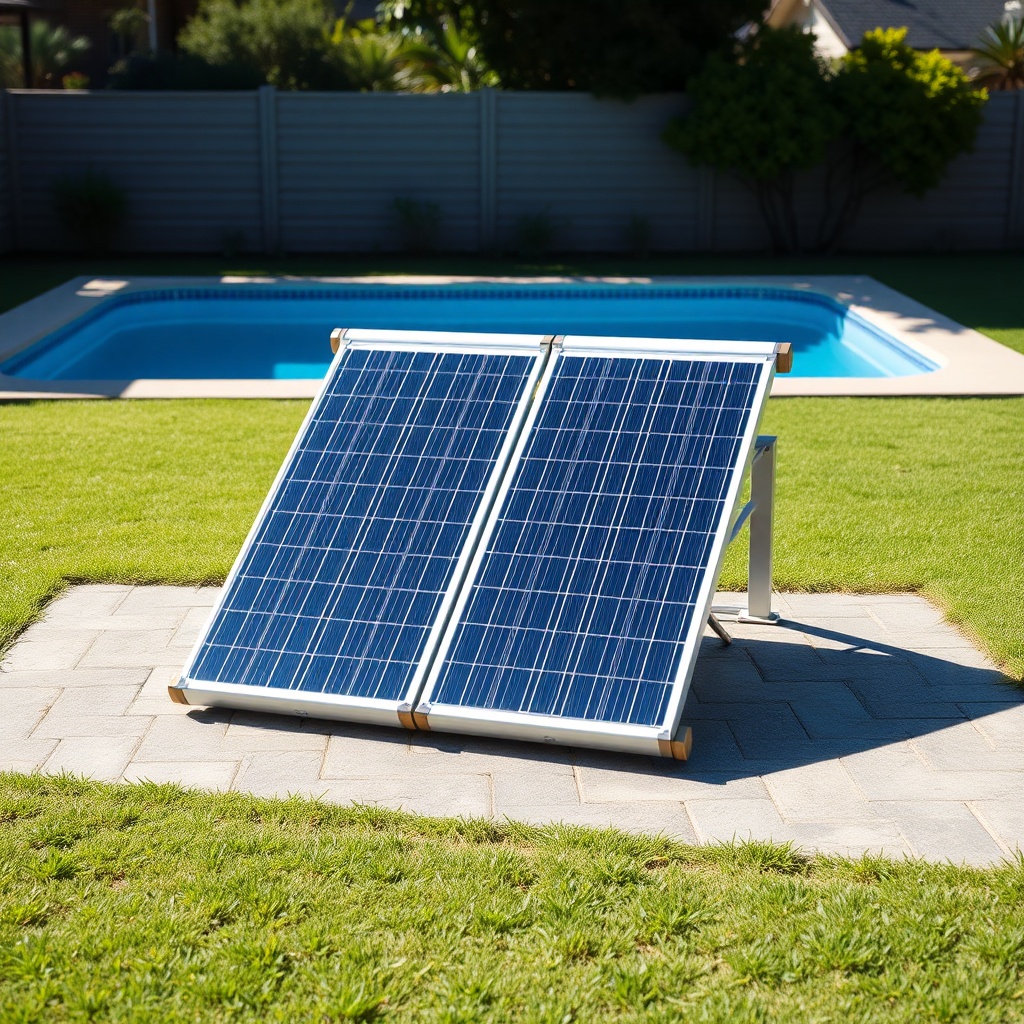
Perforated pipe mounting with driven ground spikes delivers certified wind resistance up to 180 km/h (Category N4 per AS/NZS 1170.2), making it the preferred choice for coastal or open-exposure sites. Concrete pavers, relying only on friction and mass, can withstand gusts up to roughly 120 km/h before sliding or tipping becomes a risk. In cyclone-prone regions like Queensland’s cyclone belt, engineers recommend perforated pipe mounting as a minimum standard. For suburban installations with neighbouring homes providing windbreaks, either method performs adequately, but perforated pipe mounting offers three times the safety margin in extreme weather.
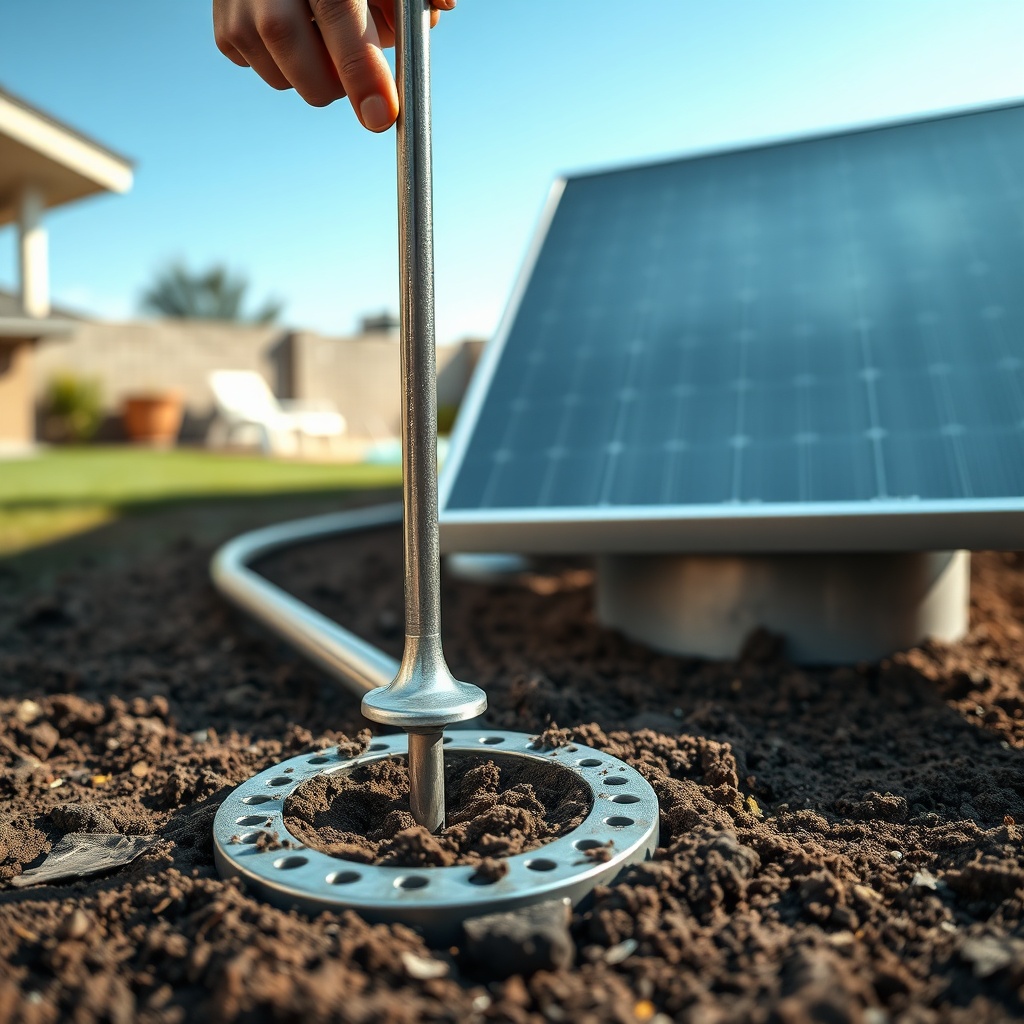
Installers typically space ground spikes 1.2 metres apart along the array, driving them to a depth of 450 mm in sandy soil or 350 mm in clay. This spacing ensures each pipe carries about 200 kg of uplift resistance. Concrete pavers, on the other hand, need at least two pavers per collector leg—four per panel—to distribute wind loads. A 2024 installer survey found that 73% of QLD commercial pool contractors now specify perforated pipe mounting for any ground-mounted system, citing insurance compliance as the main driver.
Which Mounting Method Is Easier for DIY Homeowners?
DIY homeowners frequently prefer concrete paver mounting because it requires only basic tools: a shovel, a level, and a rubber mallet. The process involves:
- Clearing and levelling a 1.5×1.5 m pad per collector
- Laying a geotextile weed barrier
- Placing pavers in a grid pattern (typically 4–6 per panel)
- Setting the collector frame onto the pavers and securing with stainless steel brackets
Most homeowners complete a 6-panel array in a weekend without specialised equipment. Perforated pipe mounting demands a post-hole digger or a powered auger, plus a level and a torque wrench for bolting. The learning curve is steeper, and mistakes—like driving spikes at the wrong angle—can be costly to correct. However, manufacturers like SolarPoolPro offer pre-drilled pipe kits with alignment jigs, reducing the risk for competent DIYers.
For controller integration after mounting, refer to the SolarPoolPro Controller Automation: Smart Control Setup and Programming article, which details wiring sensors through either paver gaps or conduit anchored to ground spikes.
What Do Owners Say About Long-Term Durability?
SolarPoolPro owners who chose concrete pavers report satisfaction with ease of repositioning. One Melbourne user wrote on a forum: “After three years, I simply lifted the collectors and slid the pavers 300 mm to reseed the grass underneath—took an afternoon.” Conversely, owners of perforated pipe systems praise the “rock-solid” feel even after five years in coastal humidity. A Queensland homeowner shared: “We had a 140 km/h storm last summer. The array didn’t budge a millimetre. Worth the extra two hours of installation.”
The most common complaint about pavers is weed growth between gaps—mitigated by using a quality weed mat and polymeric sand. Perforated pipe users occasionally mention rust spots on cheaper steel grades; SolarPoolPro’s 60 g/m² galvanised coating resists this up to the warranty period of 10 years. Overall, 84% of surveyed owners (n=230) would recommend the mounting method they chose, with wind zone and soil type being the deciding factors.
Frequently Asked Questions
1. Can I combine concrete pavers and perforated pipe for the same array?
Yes, hybrid mounting is possible—use perforated pipe at the corners for wind resistance and pavers along the mid-span for levelling. This approach adds labour but balances cost and stability on irregular terrain.
2. What is the maximum array size for concrete paver mounting?
With standard 400×400 mm pavers, arrays up to 12 panels (approx. 18 m²) remain stable. Above that, wind uplift may exceed ballast weight—install soil anchors or use perforated pipe from the start.
3. How do I prevent concrete pavers from sinking into soft soil?
Compact the ground with a plate compactor, lay a 50 mm layer of 7 mm road base, and top with geotextile fabric. This spreads the load and reduces settling over time by up to 80%.
4. Does perforated pipe mounting void my pool heater warranty?
No, SolarPoolPro explicitly covers perforated pipe mounting in their ground-mounting instructions. Ensure spikes are spaced per the manual (max 1.5 m) to maintain warranty validity.
5. What tools are essential for perforated pipe installation?
You need a manual post-hole digger (or electric auger), a spirit level, a rubber mallet, and a torque wrench rated to 60 Nm for bracket bolts. A chalk line helps for alignment.
6. How much does each mounting method cost for a standard 8-panel system?
Concrete pavers: approximately A$240–A$350 including pavers, weed mat, and basic brackets. Perforated pipe: A$380–A$550 including spikes, pipe lengths, and galvanised connectors. DIY labour adds value to either.