Heliocol HC-65 Minimum Flow Rate and Pump Sizing Guide
Proper pump sizing for the Heliocol HC-65 solar pool heating system isn’t just about moving water—it’s about achieving the correct balance between flow rate, pressure drop, and thermal efficiency. This guide provides the specific minimum flow rate requirements for the HC-65, helps you calculate the right pump horsepower for your installation, and addresses common pitfalls that reduce system performance. Whether you’re retrofitting an existing pump or planning a new build, these technical details will prevent costly mistakes and ensure your HC-65 delivers maximum heat output.
What Is the Minimum Flow Rate for the Heliocol HC-65 Panel?
The Heliocol HC-65, with its unglazed polypropylene construction and 4-foot by 8-foot panel dimensions (32 square feet per panel), requires a minimum flow rate of 1.5 gallons per minute (GPM) per panel to maintain adequate turbulence and heat transfer. However, the manufacturer recommends a design flow rate of 3.5 to 5 GPM per panel for optimal performance in most residential installations. At the minimum flow, thermal efficiency drops by roughly 15–20% compared to the recommended range, and the risk of air entrapment or scaling increases in areas with hard water.
For a typical system with 4 panels, that translates to a minimum of 6 GPM total and a recommended target of 14 to 20 GPM at the collector array. The key is matching this to your pump’s performance curve at the specific head loss your plumbing imposes.
How Do I Calculate the Required Pump Horsepower for My HC-65 System?
Pump sizing for the HC-65 depends on three variables: total GPM needed, total dynamic head (TDH) of the system, and the pump’s efficiency at that operating point. A conservative formula for splash or dedicated solar pump selection is:
- 1/2 HP pump → sufficient for 2–4 panels (low head, short pipe runs)
- 3/4 HP pump → ideal for 4–6 panels (moderate head, typical residential roof)
- 1 HP pump → required for 6–8 panels or longer runs (over 50 feet of 2-inch pipe)
As a real-world example, a 5-panel HC-65 array with 40 feet of 2-inch schedule 40 PVC, four 90-degree elbows, and a 12-foot elevation rise will generate roughly 35 feet of TDH. A 3/4 HP pump with a 20-GPM curve at that head will deliver approximately 16 GPM—right in the sweet spot. Always consult the pump manufacturer’s curve, not just the horsepower rating, as some 1 HP pumps produce less flow at high head than a properly selected 3/4 HP unit.
If you’re comparing panel options, see our Heliocol HC-65 vs HC-50: Comparison Guide for Solar Pool Heating for the flow trade-offs between the two models.
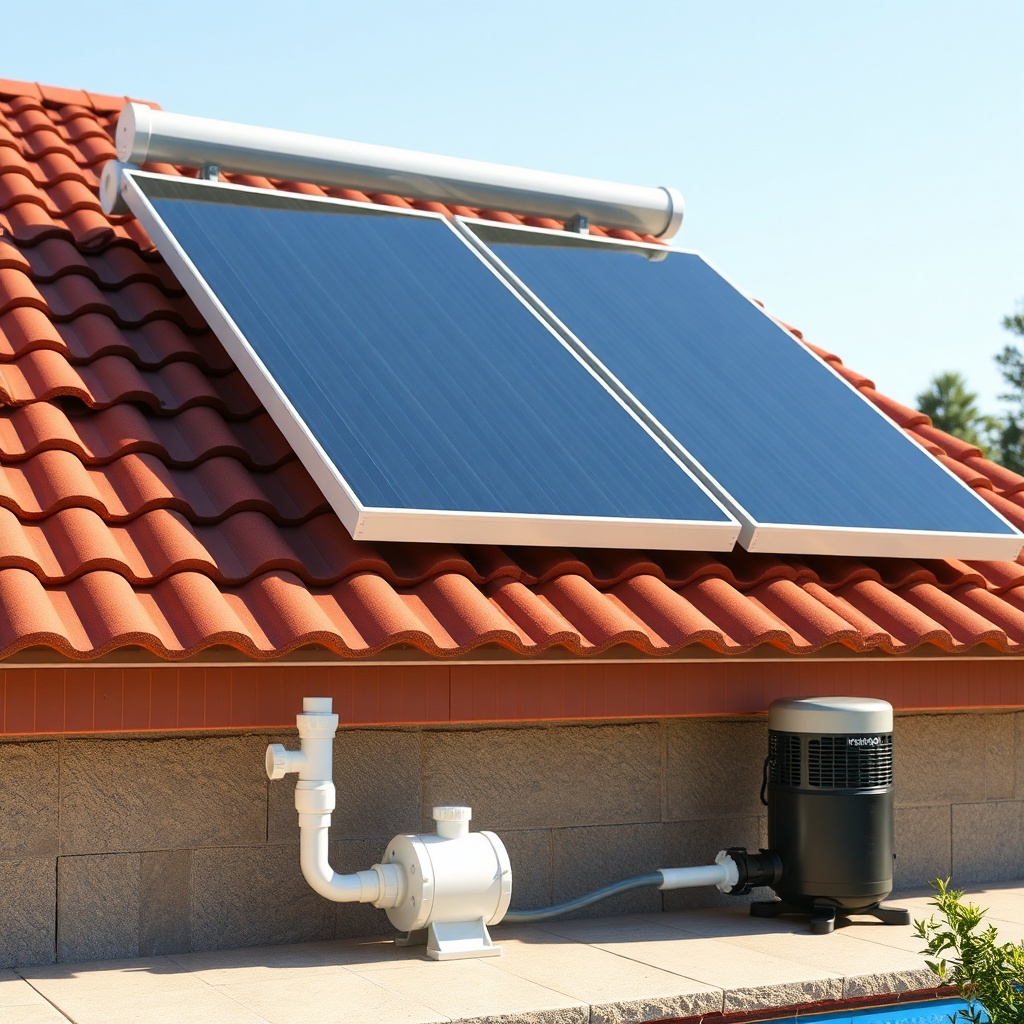
What Happens If My Pump Provides Too Little or Too Much Flow?
Too little flow (below 1.5 GPM per panel) results in laminar flow inside the HC-65 absorber tubes, dramatically reducing heat transfer to the water. You’ll see lukewarm output even on sunny days, and the panel can overheat in stagnant conditions, accelerating UV degradation of the polypropylene material. In extreme cases, low flow promotes algae growth inside the tubing.
Too much flow (above 8 GPM per panel) wastes pump energy and increases system operating cost. The HC-65’s internal headers and riser tubes have a maximum recommended velocity of 6 feet per second. Exceeding this can erode the internal fittings over time and push the pump into an inefficient, high-horsepower region. For a 4-panel array, a 1.5 HP pump running at full speed might deliver 40 GPM—twice what’s useful—costing you an extra £80 to £120 per year in electricity in the UK market.
How to Size the Pump for Multiple HC-65 Panels in Parallel?
For arrays larger than 6 panels, Heliocol recommends a parallel manifold configuration with equal-length supply and return runs (reverse return if the roof slope is uneven). Each panel in parallel sees the same pressure drop, so total flow is additive. The head loss for a single HC-65 at 4 GPM is approximately 2.3 feet of water; for 8 panels at 4 GPM each (32 GPM total), the manifold and panel head loss will be similar to a single panel’s if properly designed.
The real head comes from the main pipe runs and elevation. Use this simplified table for array sizing with a 2-inch supply line:
| Number of HC-65 Panels | Recommended Pump HP | Target GPM | Typical TDH (feet) | Estimated Annual Energy Cost (UK/£) |
|---|---|---|---|---|
| 2–4 | 1/2 HP | 8–16 | 15–25 | £45–£70 |
| 5–7 | 3/4 HP | 17–28 | 25–40 | £70–£110 |
| 8–10 | 1 HP | 28–40 | 35–50 | £100–£150 |
| 11–14 | 1.5 HP | 40–56 | 45–60 | £140–£200 |
Note that using variable-speed pumps can reduce electricity consumption by 40–60% compared to single-speed models, especially if you run the system at lower flow during mild sunshine and higher flow during peak demand. For automation options, check out our Heliocol HC-65 Controller Automation: Smart Control Setup and Programming.
What Is the Pressure Drop per Heliocol HC-65 Panel?
The pressure drop across a single Heliocol HC-65 panel at the recommended 4 GPM is approximately 0.85 psi (2.0 feet of head). At the minimum flow of 1.5 GPM, the drop falls to about 0.25 psi (0.6 feet). This low-friction characteristic is one of the HC-65’s advantages, allowing smaller pumps than some competitive panels. However, this does not mean you can skip the pump sizing—the cumulative drop through manifolds, risers, and back to the pool must be calculated.
For a 6-panel array in parallel, the pressure drop across the collector bank remains close to that of a single panel (around 2 feet of head). It’s the longer pipe runs and elevation that dominate. A typical 2-inch supply line 60 feet long with four elbows adds about 8–10 feet of head at 30 GPM. Add a 15-foot elevation rise to the roof, and your total dynamic head is around 25–30 feet. That’s well within the range of a 3/4 HP pump.
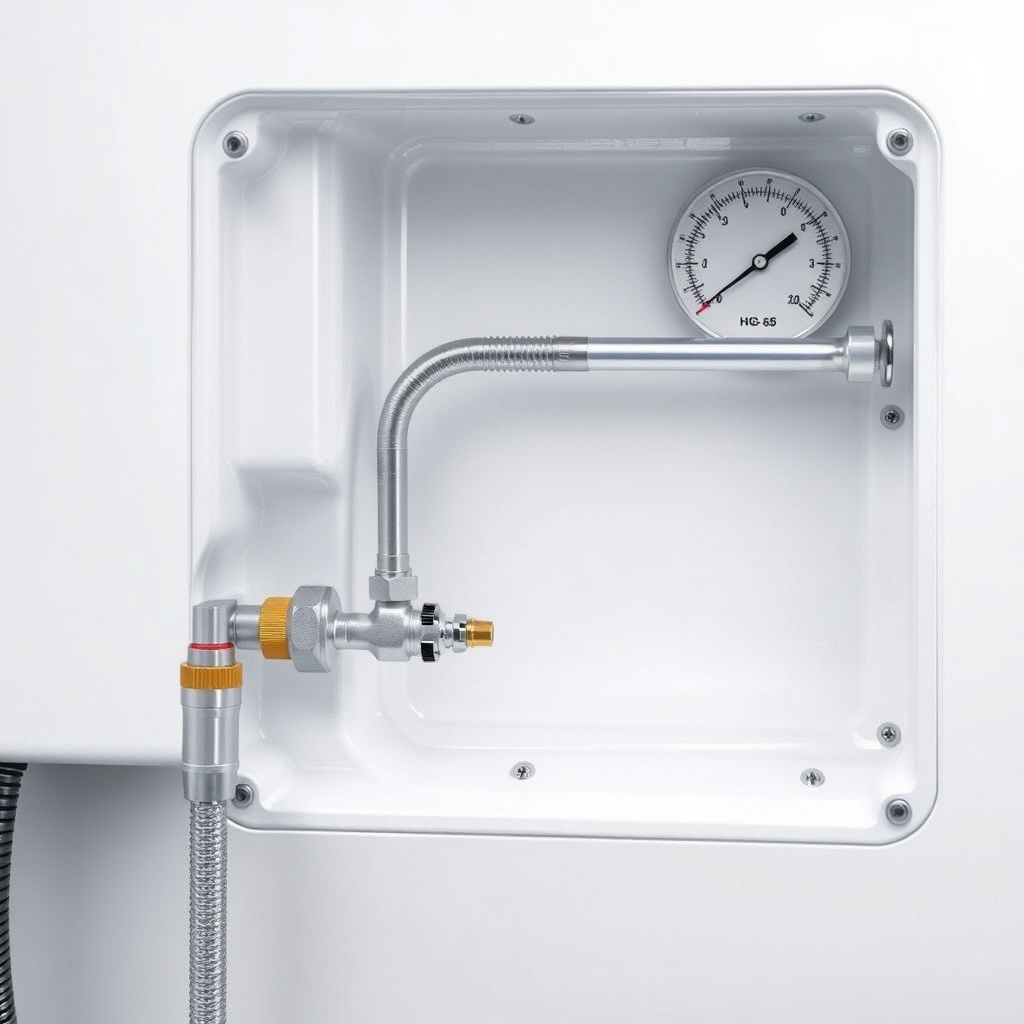
Can I Use My Existing Pool Pump with the Heliocol HC-65?
Yes, but only if the pump’s flow rate at your system’s head is within the 1.5–8 GPM per panel range. A typical 1 HP single-speed pool pump (e.g., a Pentair SuperFlo) may produce 60+ GPM at low head—far too much for a 4-panel HC-65 array. In that case, you must install a bypass valve or a flow control valve to throttle the flow down to 16–20 GPM. Throttling wastes energy but is often simpler than replacing the pump.
If your existing pump is variable-speed, you can typically set it to a lower RPM (e.g., 2400–2800 RPM) to achieve the target flow range. Test with a flow meter or measure the pressure differential—if the return pressure is more than 8–10 psi above the intake, you’re likely over-pumping. A dedicated solar pump or a smaller secondary pump is often the most efficient solution for HC-65 arrays of 6 or more panels.
What Owners Say About Pump Sizing for the HC-65
Experienced installers and DIY owners consistently highlight three things about the HC-65’s flow requirements. First, many underestimate the importance of the pump curve—matching a 1 HP pump that looks right on paper but delivers only 10 GPM at 30 feet head is a common error. “I bought a 1 HP pump from a discount store, and my system barely warmed the pool,” wrote one owner from Cornwall. After switching to a 3/4 HP pump with a better curve, the same array delivered 16 GPM and the pool temperature rose 8°F.
Second, owners with variable-speed pumps are unanimous that the initial cost is worth the long-term savings. A forum member in Scotland reported cutting his electricity bill from £130 per season to £52 by using a variable-speed pump at 1800 RPM for baseline heating and boosting to 2800 RPM on cloudy days.
Third, the HC-65’s low pressure drop means that smaller pumps (like 1/2 HP) work well for small arrays, but must be derated for elevation. An owner with a 3-panel system on a two-story house found a 1/2 HP pump struggled—he needed a 3/4 HP unit to overcome the 20-foot static head.
Frequently Asked Questions
1. Can I run the Heliocol HC-65 with a 1/3 HP pump?
A 1/3 HP pump is only sufficient for one or two panels with very short pipe runs (under 30 feet total, minimal elevation). For any standard residential installation with 3 panels or more, it will not provide the minimum 1.5 GPM per panel.
2. What diameter pipe should I use for the HC-65 manifold?
For arrays up to 6 panels, 1.5-inch pipe is acceptable but 2-inch is strongly recommended to reduce friction loss. For 7–10 panels, use 2-inch minimum. For larger arrays, 2.5 or 3-inch supply lines may be needed.
3. How do I measure flow rate through my HC-65 panels?
Install a flow meter on the return line after the panels, or use a bucket-and-stopwatch method if you have a bypass: time how long it takes to fill a 5-gallon bucket, then calculate GPM. Alternatively, measure pressure drop across a known reference like a flow control valve.
4. Will a solar cover reduce the pump flow requirement?
No—a solar cover reduces heat loss but does not change the plumbing resistance or the need for adequate flow through the panels. Always size the pump to the panel count, not the cover.
5. Is it better to oversize the pump “a little”?
No. Oversizing by more than 20% of the recommended maximum flow (8 GPM per panel) wastes energy and stresses the plumbing. It’s far better to slightly undersize and let the pump run a bit longer—efficiency is almost always higher at modest flow rates.
6. Can I automate pump speed based on solar intensity?
Yes, using a smart controller with a flow adjustment feature. Our Heliocol HC-65 Controller Automation guide covers this in detail, including programming with a variable-speed pump and a solar temperature sensor.