SolarPoolPro Minimum Flow Rate and Pump Sizing Guide
Proper pump sizing and flow rate management are critical for maximising the efficiency of a SolarPoolPro solar heating system. Without sufficient flow, your panels will underperform and may even overheat, reducing both heating capacity and system lifespan. This guide provides clear, practical specifications for minimum flow rates, pump selection, and system balancing to ensure your SolarPoolPro installation delivers consistent, cost-effective heating.
What is the minimum flow rate required per SolarPoolPro panel?
Each SolarPoolPro panel is designed to operate efficiently within a specific flow range. The minimum flow rate per panel is 0.05 m³/h (approximately 0.22 US GPM) per square metre of absorber area. For a standard 2.5 m² panel, this equates to a minimum of 0.125 m³/h (0.55 US GPM) to prevent stagnation and potential overheating. Below this threshold, heat transfer drops significantly, and the risk of panel degradation increases.
Exceeding the maximum flow rate (typically 0.12 m³/h per m²) offers no additional heating benefit and can cause pressure losses that strain the pump. For most residential systems, a flow rate of 0.08–0.10 m³/h per m² provides the best balance of thermal output and hydraulic efficiency.
How do I calculate total system flow rate for my SolarPoolPro array?
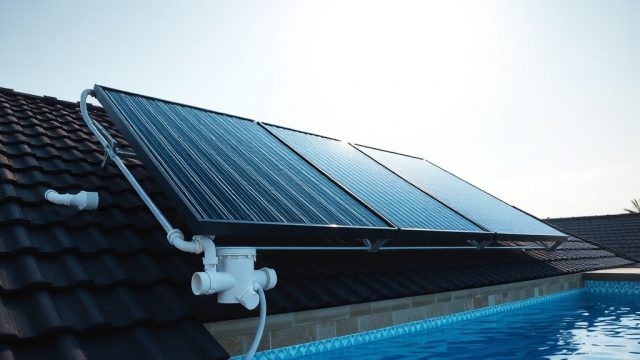
Total required flow is simply the sum of individual panel minimums, but you must account for series or parallel configurations. In parallel plumbing, each panel receives full flow, so total flow = number of panels × minimum flow per panel. In series, the flow passes through each panel sequentially—the single flow rate must meet the minimum for each panel, but the pump sees the same volume as for one panel.
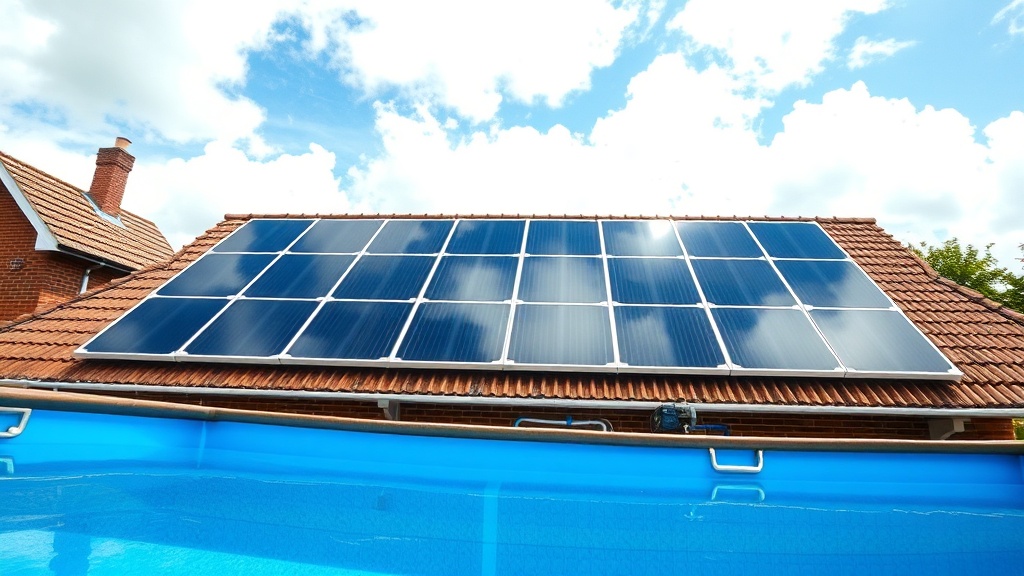
For a typical UK home with 6 panels (2.5 m² each, total 15 m²), a parallel setup requires: 6 × 0.125 m³/h = 0.75 m³/h (approximately 3.3 US GPM). Add 10–15% for friction losses in pipework, giving a target pump capacity of about 0.85 m³/h. Use the same logic for any array size, referencing the SolarPoolPro Pool Size and Climate Match: Sizing for Optimal Heating article to correlate panel count with pool volume.
What pump specifications are recommended for SolarPoolPro systems?
Choose a pump that delivers the calculated flow rate at the expected total head (pressure loss). For most domestic installations, a variable-speed centrifugal pump is ideal—it allows precise flow adjustment and reduces electricity costs. Below is a recommended pump sizing table based on common array sizes:
| Total Panel Area (m²) | Min. Flow Rate (m³/h) | Suggested Pump Power (W) | Max Head Loss (mH₂O) |
|---|---|---|---|
| 10–15 | 0.6–0.85 | 250–400 | 4–6 |
| 16–25 | 0.9–1.5 | 400–750 | 6–8 |
| 26–35 | 1.6–2.1 | 750–1100 | 8–10 |
| 36–50 | 2.2–3.0 | 1100–1500 | 10–12 |
Note: Always verify the pump curve matches your system’s total dynamic head, which includes elevation, pipe length, and fitting losses. For retrofit installations, consult the SolarPoolPro Fitting Compatibility: Unions, Adapters, and Retrofit Kits guide to ensure proper hose connections and minimise pressure drops.
How does pipe diameter affect flow rate and pump sizing?
Undersized pipes are a common cause of reduced flow. A 32 mm (1.25″) pipe can carry approximately 1.2 m³/h at 1.5 m/s velocity, while 40 mm (1.5″) pipe handles up to 2.0 m³/h. Using 50 mm (2″) pipe is advised for arrays exceeding 35 m². Smaller diameters increase friction, requiring higher pump power and reducing efficiency.
For arrays up to 20 m², use 40 mm pipe for the main supply and return lines. For larger systems, step up to 50 mm. The SolarPoolPro Ground Mounting Guide: Concrete Pavers vs Perforated Pipe offers additional advice on routing underground pipes without restriction.
Can I use my existing pool pump for SolarPoolPro panels?
In many cases, yes, but only if your existing pump provides adequate flow at the head required by the panels. Most single-speed pool pumps (0.75–1.1 kW) deliver 4–6 m³/h at 10 m head—sufficient for arrays up to 30 m². However, you must install a bypass valve and a solar diverter valve to avoid forcing full flow through the panels when heating is not needed.
If your existing pump is undersized or you have a variable-speed unit, the SolarPoolPro Controller Automation: Smart Control Setup and Programming article explains how to integrate automated bypass and flow monitoring for optimal energy savings. A dedicated solar pump is recommended for arrays over 40 m² or when the main pump is used for other functions like filtration or cleaning.
What happens if the flow rate is too low or too high?
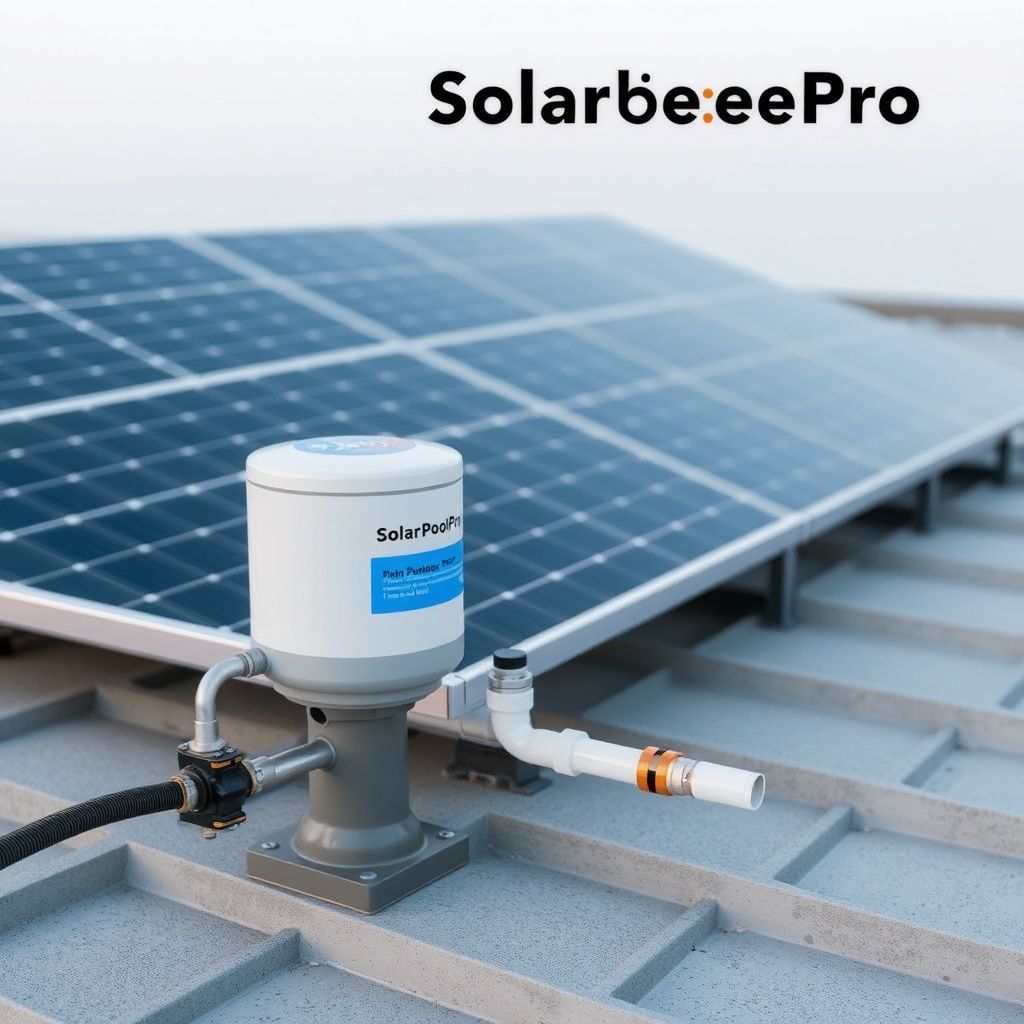
Low flow (below 0.05 m³/h per m²) causes stagnant hot spots that can warp absorber sheets or degrade the EPDM rubber over time. You may also notice cooler return water and longer heating cycles. High flow (above 0.12 m³/h per m²) wastes pump energy and can erode pipe fittings, while offering no additional heat gain.
Signs of poor flow include uneven panel temperatures (visible with thermal camera), air locks, or noisy pump operation. If you suspect an issue, check for blocked panels, undersized pipes, or a pump that has lost prime. Regular maintenance is key—see the SolarPoolPro Maintenance Schedule Guide: Seasonal Tasks for Optimal Performance for a full checklist.
What owners say about SolarPoolPro flow and pump sizing
Installers and homeowners consistently praise the simplicity of SolarPoolPro’s flow calculations. Many note that using the supplied flow chart prevents costly mistakes. “We installed 8 panels with a 0.55 kW pump, and the temperature rise is a steady 3–4°C even on partly cloudy days,” one UK owner reported. Another said, “The variable-speed pump paid for itself within two seasons through reduced electricity bills.”
Common feedback highlights the importance of accurate head loss calculation. “I used the online calculator and found my existing pump was borderline—upgrading to a 0.75 kW model solved everything,” shared a owner from the West Midlands. For those pairing panels with heat pumps, the SolarPoolPro ROI Analysis: Energy Savings and Payback Period provides realistic payback examples.
Frequently Asked Questions
Q1: Can I use a solar pump rated for higher flow than needed?
A: Yes, but only if you install a flow control valve to throttle the output to the required rate. Oversized pumps waste energy unless paired with a variable-speed drive.
Q2: How often should I check the flow rate?
A: At least once per season, preferably before the heating season starts. Use a simple flow meter installed on the return pipe to monitor continuously.
Q3: What is the ideal pressure drop across the SolarPoolPro panels?
A: Aim for 0.3–0.6 bar (3–6 mH₂O) total pressure drop across the array. Higher values indicate blocked panels or undersized pipework.
Q4: Can I combine SolarPoolPro with a heat pump or gas heater?
A: Yes, but you must install a bypass and check valve to isolate the solar loop. The flow rate for the solar panels must remain within the specified range regardless of secondary heating.
Q5: What type of pump is most energy-efficient?
A: A variable-speed DC or EC (electronically commutated) pump is best. It can adjust flow to match solar conditions, reducing energy consumption by 30–60% compared to fixed-speed pumps.
Q6: Do I need a separate pump if my pool pump can handle the flow?
A: Not necessarily, but you need a solar control valve that diverts water through the panels when heating is beneficial. In many setups, a dedicated solar pump simplifies control and avoids conflicts with filtration schedules.