How Does Your Pool’s Size Determine Solar Heating Requirements?
Before diving into solar heating, pool owners must understand that surface area and volume are the twin drivers of heat loss and gain. A 15,000-gallon pool in a moderate climate will demand far less collector area than a 40,000-gallon one exposed to strong winds. SolarPoolPro systems are designed to scale, but getting the size right from the start prevents underspending on panels that never raise the temperature or overspending on surplus square footage that idles in sunny months.
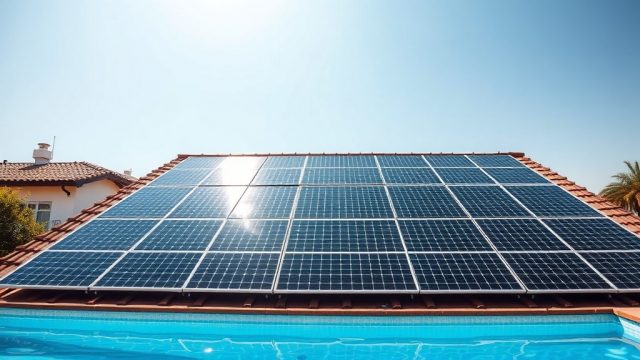
Solar collectors are typically sized to 50%–80% of the pool’s surface area for seasonal swimming extension in mild climates, but for year-round use in colder regions, 100%–120% coverage is recommended. For example, a 20′ × 40′ pool (800 sq. ft.) in the UK or northern US would need 800–960 sq. ft. of SolarPoolPro panels to add 8–12°F during shoulder seasons. That translates to roughly 8–10 panels from the SolarPoolPro 4′ × 20′ range. Volume also matters: a deeper pool loses heat slower but requires more energy the first time you bring it from 60°F to 80°F. Use the solar load equation (BTU/hr = pool area × temperature rise × wind/convection factor) to confirm your panel count.
For pinpoint sizing, consult the SolarPoolPro Fitting Compatibility: Unions, Adapters, and Retrofit Kits guide to ensure your collector connections match existing plumbing diameters. A mismatch here can restrict flow and cut heating output by 15%.
What Climate Factors Most Affect Solar Pool Heating Performance?
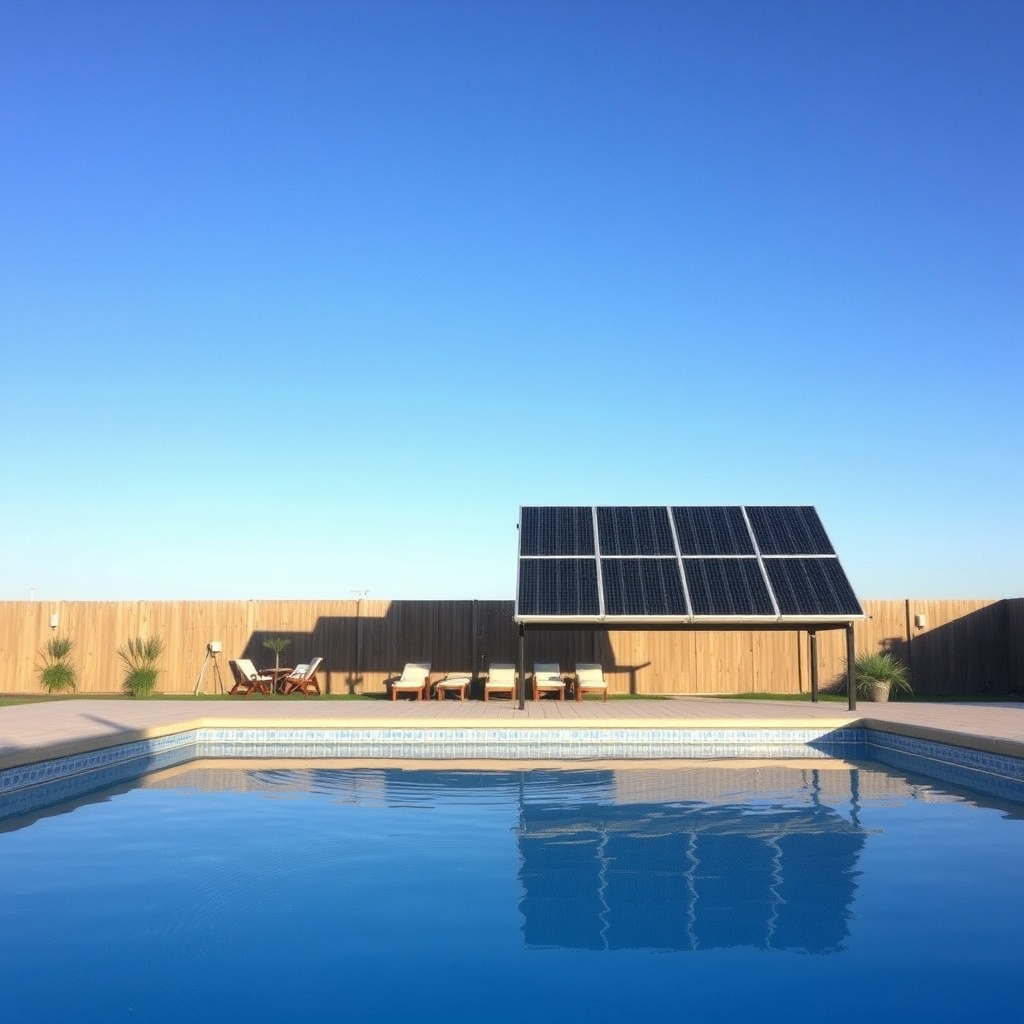
Latitude, average winter sun hours, ambient temperature, and wind exposure are the four pillars. SolarPoolPro collectors work best with 4+ peak sun hours daily. Northern Europe and the US Pacific Northwest average 2–3 winter hours, so you need more panels or a tracking mount. The Mediterranean, southern US, and Australia’s Gold Coast deliver 5–6 hours, allowing smaller arrays. Wind strips heat from pool water faster than air temperature loss alone. If your pool is exposed to steady 15 mph winds, you lose 30% more heat nightly. SolarPoolPro’s ground mount orientation can mitigate this by facing 15° into prevailing winds, but additional collector area is often required. Humidity also matters: dry air accelerates evaporation cooling, while humid air slows it. A pool in Phoenix (low humidity) may need 15% more panel area than one in Tampa (high humidity) of the same size.
Climate zone recommendations for SolarPoolPro systems:
| Climate Zone | Example Location | Recommended Collector Area (% of pool surface) | Expected Season Extension |
|---|---|---|---|
| Hot/Year-Round | Miami, Dubai | 40–60% | Year-round, 85–90°F water |
| Mediterranean | Los Angeles, Barcelona | 50–70% | March–November, +8–12°F |
| Temperate | London, Seattle | 80–100% | May–September, +6–10°F |
| Cold/Windy | Toronto, Stockholm | 100–120% | June–August, +4–8°F |
How Do You Calculate the Correct Number of SolarPoolPro Panels?
Start with your pool’s surface area (length × width). For irregular shapes, average width × length works within 5%. Then determine your target temperature rise — most owners aim for 8–12°F above ambient pool temperature. SolarPoolPro panels produce roughly 600 BTUs per square foot per peak sun hour in full sun. To raise a 500 sq. ft. pool by 10°F, you need 500 × 10 × 8.34 (water’s specific heat) = 41,700 BTUs. Divide by 600 = 69.5 sq. ft. of collector, but this ignores wind and nighttime losses. Accounting for 25% loss, add 25% more: 87 sq. ft. That’s about two SolarPoolPro 4′ × 12′ panels. For a 1,000 sq. ft. pool, you’d need 4 panels. Always round up if partial panels are awkward. A ground-mounted system can be easily expanded later, as covered in the SolarPoolPro Ground Mounting Guide: Concrete Pavers vs Perforated Pipe article.
Flow rate is equally critical. SolarPoolPro panels require 4–6 GPM per 4′ × 10′ panel for laminar flow. Too slow and water boils inside; too fast and abrasion wears fittings. Calculate total GPM = number of panels × 5 GPM average. A 6-panel array needs 30 GPM. If your pump delivers less, consider a variable-speed upgrade to avoid starving the collectors. Use 2″ or 2.5″ supply headers for systems over 4 panels to minimize friction loss. SolarPoolPro’s fitting compatibility guide includes pressure drop charts for 1.5″ vs 2″ connections.
What Are the Most Common Sizing Mistakes and Their Consequences?
Undersizing is the #1 error. Pool owners see lower upfront cost and later complain the water only reaches 72°F on sunny days. Conversely, oversizing by more than 30% can cause overheating, especially in warm climates, leading to water that’s 90°F+ and algae blooms. Another frequent mistake is ignoring roof or ground orientation. SolarPoolPro panels mounted on a north-facing slope (Northern Hemisphere) lose 20–30% efficiency. The best tilt is your latitude minus 10° for summer use or latitude for spring/fall. South-facing ground mounts are ideal. A third error is using small-diameter piping over long runs. A 50-foot run of 1.5″ pipe loses 3 psi at 20 GPM; expanding to 2″ drops loss to 1 psi. This affects pump energy and flow balance across panels. Finally, many forget to account for pool covers. A transparent solar cover reduces evaporation heat loss by 50%, letting you cut panel area by 20% without sacrificing temperature. SolarPoolPro’s ROI analysis shows that adding a cover with a proper solar system reduces payback period by 1–2 years.
How Does Ground Mounting Affect Panel Sizing and Efficiency?
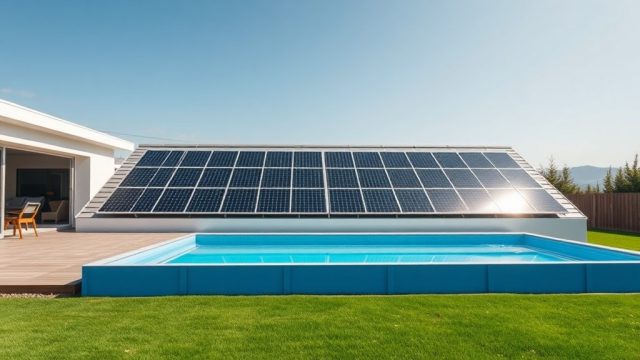
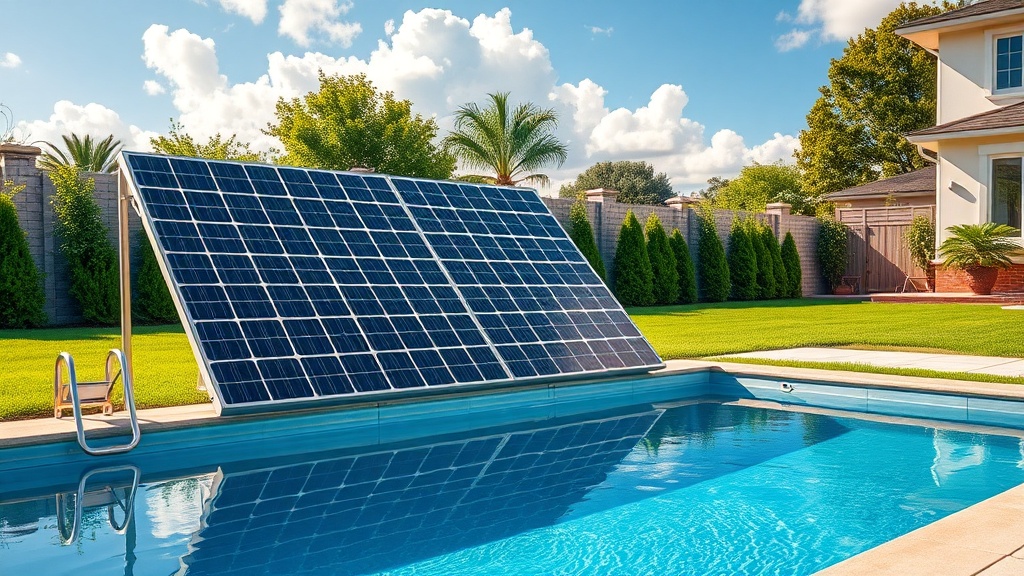
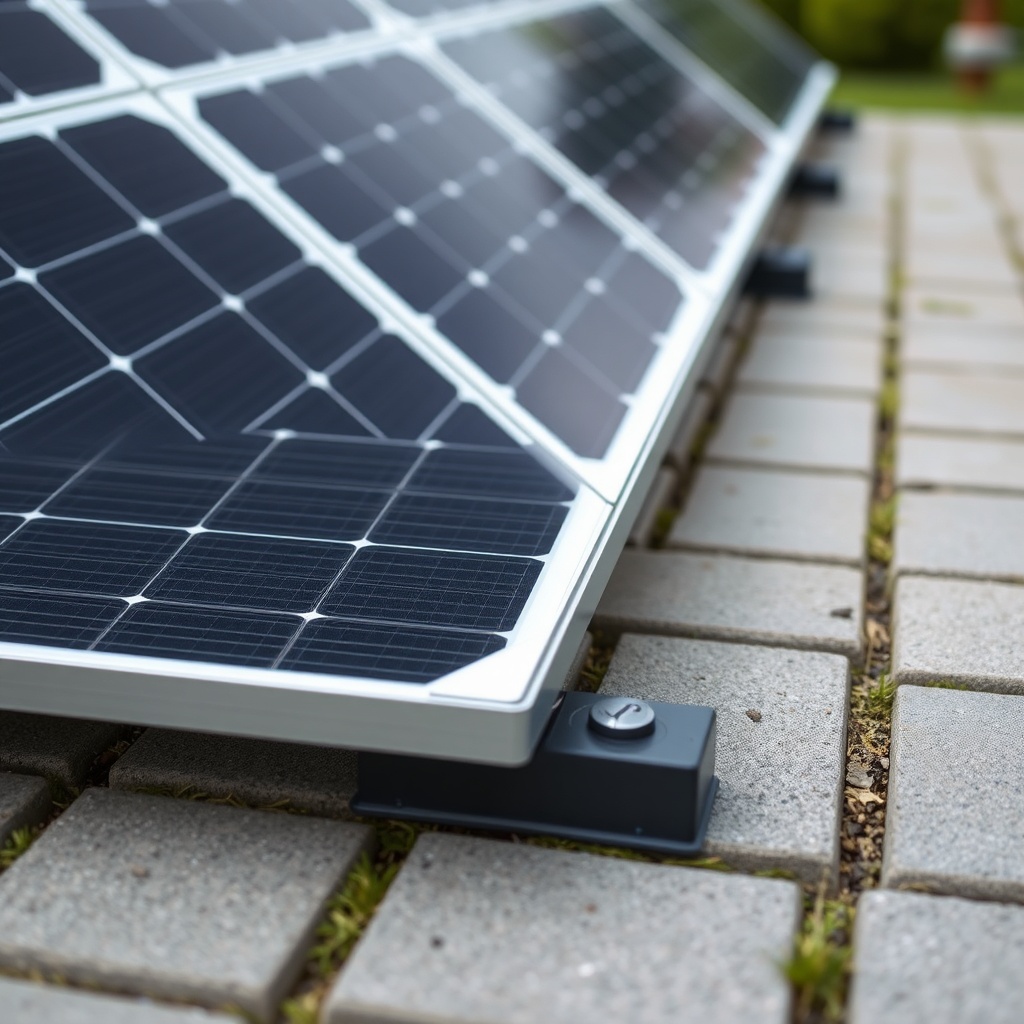
Ground mounting gives freedom in orientation and tilt. You can align panels true south and adjust tilt seasonally — fixed ground racks can tilt 15°–60°. This yields 10–15% higher annual output than a roof mount on a suboptimal angle. For a 50° latitude site like London, tilt your ground mount at 40° for May–September or 55° for year-round use. SolarPoolPro’s ground mounting system (see SolarPoolPro Ground Mounting Guide: Concrete Pavers vs Perforated Pipe) uses concrete pavers for permanent sites or perforated pipe for easy removal. With a ground mount, you can also increase collector area by 20% without roof load concerns. This matters for cold climates, where 100% coverage is recommended. For a 1,200 sq. ft. pool in Denver, that means 1,200 sq. ft. of panels — roughly 15 panels — installed on a ground rack. The extra space allows better spacing for air circulation (2″ between rows) to avoid overheating on summer days. Ground mounting also simplifies winter storage or tilt adjustments; some owners tilt panels 60° in winter to shed snow, reducing panel count needs by 10% because of improved reflectance.
What Owners Say
Owners in temperate climates consistently report that proper sizing is the key to satisfaction. “I initially bought 6 panels for my 20,000-gallon pool in Bristol, UK,” said Andrew T., “but the water only reached 72°F. After reading the sizing guide, I added 2 more panels, placed them on a south-facing ground mount, and now hit 80°F regularly from April to October.” In warmer areas, feedback emphasises avoiding overcollection. “I went with 100% coverage because I live in Arizona, but it was too much — water hit 95°F. I disconnected two panels and now it stays at 85°F perfectly,” shared Laura M. Multiple users highlight the importance of flow balancing. “My first set had a 10°F difference between panels because of improper header sizing. Once I used 2.5” headers from SolarPoolPro, all panels heated evenly.” Cost concerns are common upfront; the average SolarPoolPro installation pays back in 4–7 years, with annual savings of £300–£600 (€350–€700) depending on local energy prices. For a detailed breakdown, see the ROI analysis page.
Frequently Asked Questions
Can I mix SolarPoolPro panel sizes in one array?
Yes, but only if they share the same flow rate per square foot. Mixing 4′ × 10′ panels (40 sq. ft.) with 4′ × 20′ panels (80 sq. ft.) is fine as long as you balance headers. Uneven sizes often require additional balancing valves to avoid one panel stealing flow from another. Use the SolarPoolPro Controller Automation guide to program flow differentials.
What is the lifespan of SolarPoolPro panels?
With proper sizing and seasonal drain-down in freezing climates, they last 15–20 years. EPDM rubber degrades faster in high-UV areas but SolarPoolPro uses UV-stabilised polypropylene, which typically lasts longer. Annual cleaning with mild soap and checking for micro-cracks extends life.
How do I size for an above-ground pool?
Same principle: surface area dominates. Above-ground pools are shallower, so heat up faster but lose heat quicker at night. Use 70–90% collector coverage and always use a winter cover. For a 24′ round pool (452 sq. ft.), 3–4 panels (180–320 sq. ft.) are typical. Ensure headers are 1.5″ to match standard pumps.
Can I use SolarPoolPro with heat pumps?
Yes, and it’s often synergistic. Solar heats during the day, heat pump maintains at night. Size the solar array to cover 60% of heating demand to reduce heat pump runtime. A four-panel array can cut heat pump electricity use by 50% on sunny days. Check fitting compatibility for plumbing integration.
What happens if my panels are too large for the pool?
Water may exceed safe swimming temperatures (95°F+). Install a mixing valve or automaton diverter to bypass panels when water hits a set point. SolarPoolPro controllers in the smart control guide can manage this automatically, dumping heat to a ground loop or spa if configured.
Does cloudy weather mean I oversize panels?
Not necessarily. Diffuse light still produces 30–50% of full-sun output. Oversizing by 20–30% is beneficial in overcast climates to ensure enough heat on grey days. For instance, a 1,000 sq. ft. panel array on a British summer cloudy day still delivers 300,000 BTUs, enough to heat a typical pool by 5°F.