Understanding the Heliocol HC-50: Pool Size and Climate Match
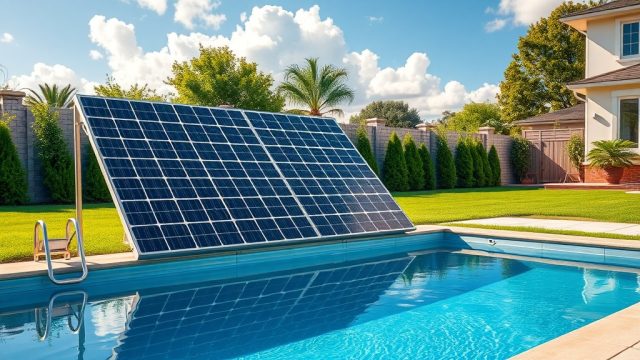
When considering a solar pool heating system, the Heliocol HC-50 stands out as a high-efficiency, freeze-tolerant panel designed for year-round operation in diverse climates. Its primary challenge for homeowners lies not in the panel’s quality, but in selecting the correct number of panels to match both the pool’s surface area and the local solar insolation levels. This article provides a data-backed framework for sizing Heliocol HC-50 arrays, ensuring you achieve target water temperatures without overspending on hardware.
We’ll examine how variables like pool surface area, wind exposure, and seasonal sun angle affect performance. Whether you’re in sun-drenched Arizona or overcast New England, the key is to size the array so that each 1.22 m x 2.44 m HC-50 panel delivers roughly 1.5 to 2.5 kW of usable heat under average conditions. The goal is to match collector area to pool volume, with a general rule of 50% to 100% of the pool’s surface area in panel coverage, adjusted for climate zone.
What Is the Right Number of HC-50 Panels for My Pool Size?
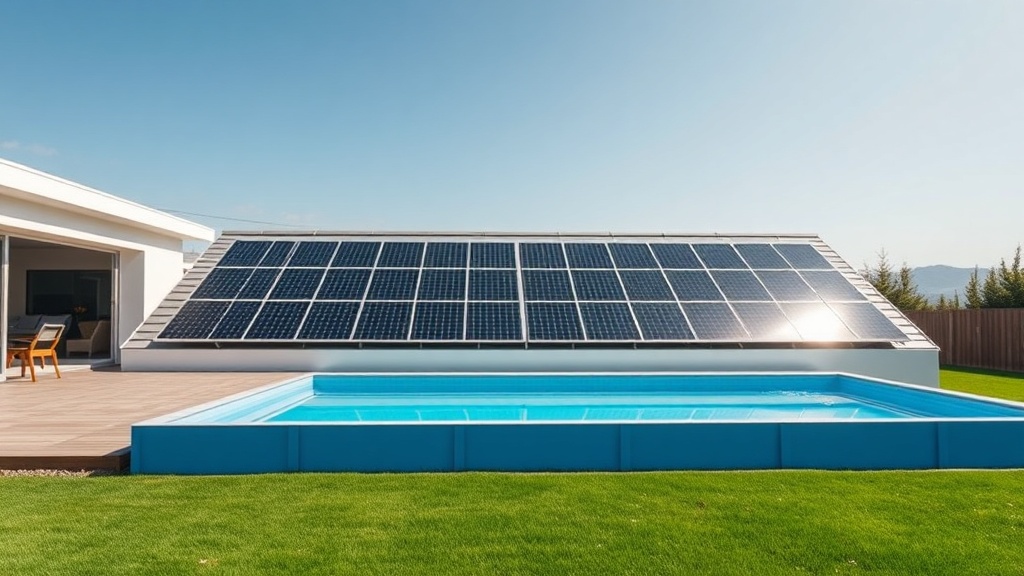
The first step is calculating your pool’s surface area. A standard 5m x 10m pool (50 m²) with average depth of 1.5m holds roughly 75,000 liters. For a moderate climate (USDA Zone 6-7), you need collector area between 50% and 75% of the pool surface area. That equates to 25 m² to 37.5 m² of Heliocol HC-50 panels. Since each HC-50 panel provides 2.98 m² of absorber area (the actual heated surface), the math yields between 9 and 13 panels.
For warmer climates (Zone 8-9), 40% coverage (20 m²) or about 7 panels often suffices. In colder northern climates (Zone 4-5), 100% coverage (50 m²) or 17 panels is prudent. To fine-tune this, divide your pool volume (in liters) by 25,000 to get a baseline panel count, then multiply by a climate factor: 0.6 for hot, 1.0 for moderate, 1.3 for cold.
| Pool Volume (liters) | Warm Climate (Zone 8-9) | Moderate Climate (Zone 6-7) | Cool Climate (Zone 4-5) |
|---|---|---|---|
| 30,000 | 4 panels (12 m²) | 6 panels (18 m²) | 8 panels (24 m²) |
| 50,000 | 6 panels (18 m²) | 9 panels (27 m²) | 12 panels (36 m²) |
| 75,000 | 9 panels (27 m²) | 12 panels (36 m²) | 16 panels (48 m²) |
| 100,000 | 12 panels (36 m²) | 16 panels (48 m²) | 20 panels (60 m²) |
How Does Climate Affect HC-50 Panel Performance?
Solar insolation varies dramatically by latitude and cloud cover. A 1.0 kW/m² peak sun hour in Phoenix delivers far more thermal energy than a 0.5 kW/m² overcast day in Seattle. The HC-50’s selective absorber coating captures about 85% of incident radiation, but only around 60% is transferred to the pool water after wind and piping losses. In high-insolation areas (6+ peak sun hours daily), you can use 4 panels for a 50,000-liter pool. In low-insolation areas (3-4 peak sun hours), you need 8 to 10 panels for the same volume.
Wind also plays a role: the HC-50’s polypropylene panels have some convective losses. In windy coastal areas, expect 10-15% less efficiency, so add 1-2 panels. For snow-prone regions, the panels must be mounted at a steeper pitch (30°-45°) to shed snow and maximize winter absorption. Our Snow Load Considerations for Pitched Roof Mounting guide covers structural requirements for such installations.
Can I Mix HC-50 Panels with Other Heliocol Models?
Yes, but with restrictions. The HC-50 has specific hydraulic characteristics: a maximum operating pressure of 50 psi and a pressure drop of about 0.3 psi per panel at 3 GPM flow. You can connect it to the same manifold as an HC-40 or HC-55, but mixing models with different flow resistance can create imbalances. The HC-50 uses 32 mm (1.25 inch) header tubes, while the HC-40 uses 25 mm headers. If mixing, ensure each panel receives at least 3 GPM (11.4 L/min) and no more than 6 GPM. Use a flow meter and balancing valves.
For pump sizing, you need to account for the total flow requirement. A system with 10 HC-50 panels demands 30 GPM minimum; a standard 1.5 HP pump can handle that, but only if the piping is correctly sized. Our detailed Heliocol HC-50 Minimum Flow Rate and Pump Sizing Guide explains exactly how to calculate pump head and flow for your specific layout.
What Roof Mounting Considerations Affect Sizing?
The mounting type directly impacts the total panel count you can install. For flat roofs, ballasted mounts require 30-50 kg of weight per panel, which may limit the number of panels if the roof’s structural rating is low. Our Flat Roof Mounting Guide: Ballast vs Through-Bolt compares these methods. Through-bolting allows more panels per roof area because it spreads the load across fasteners, not just weight.
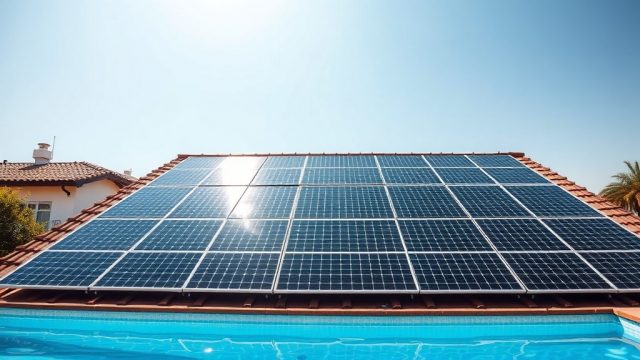
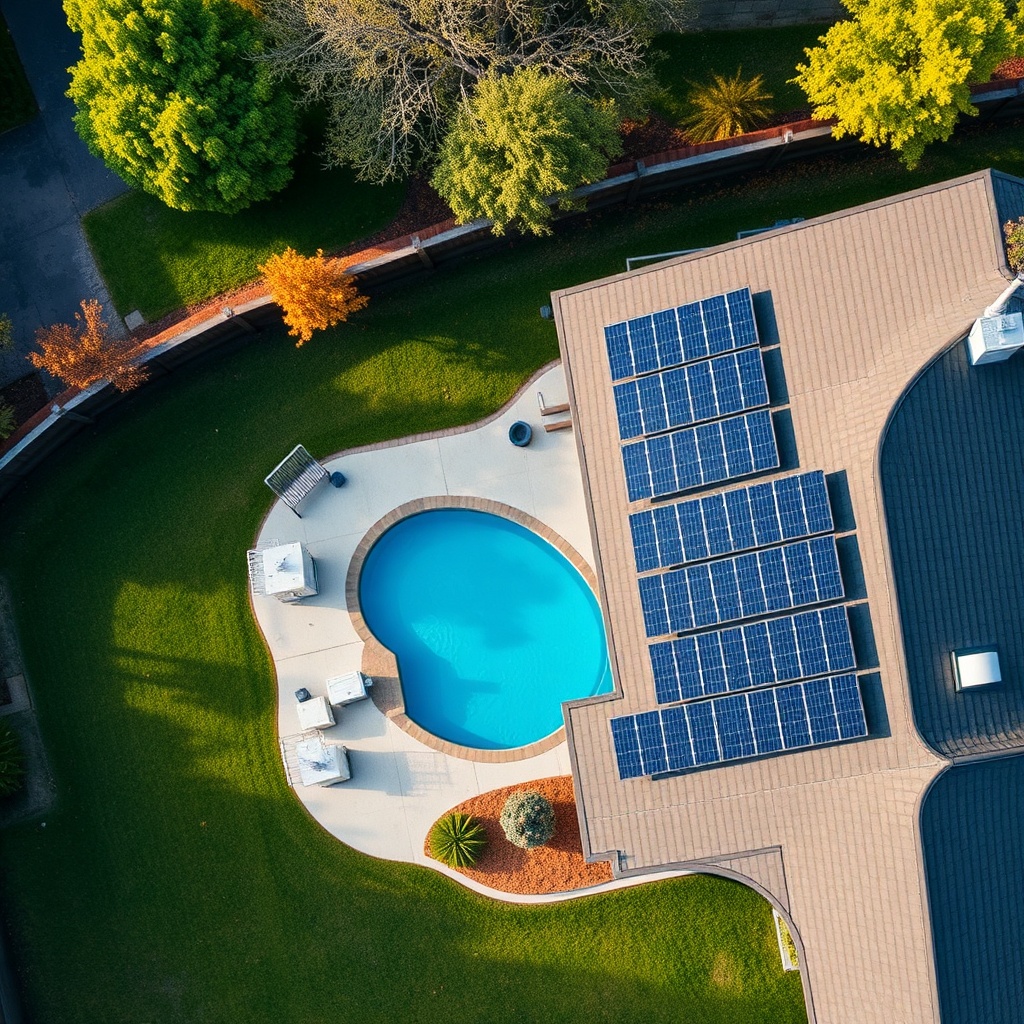
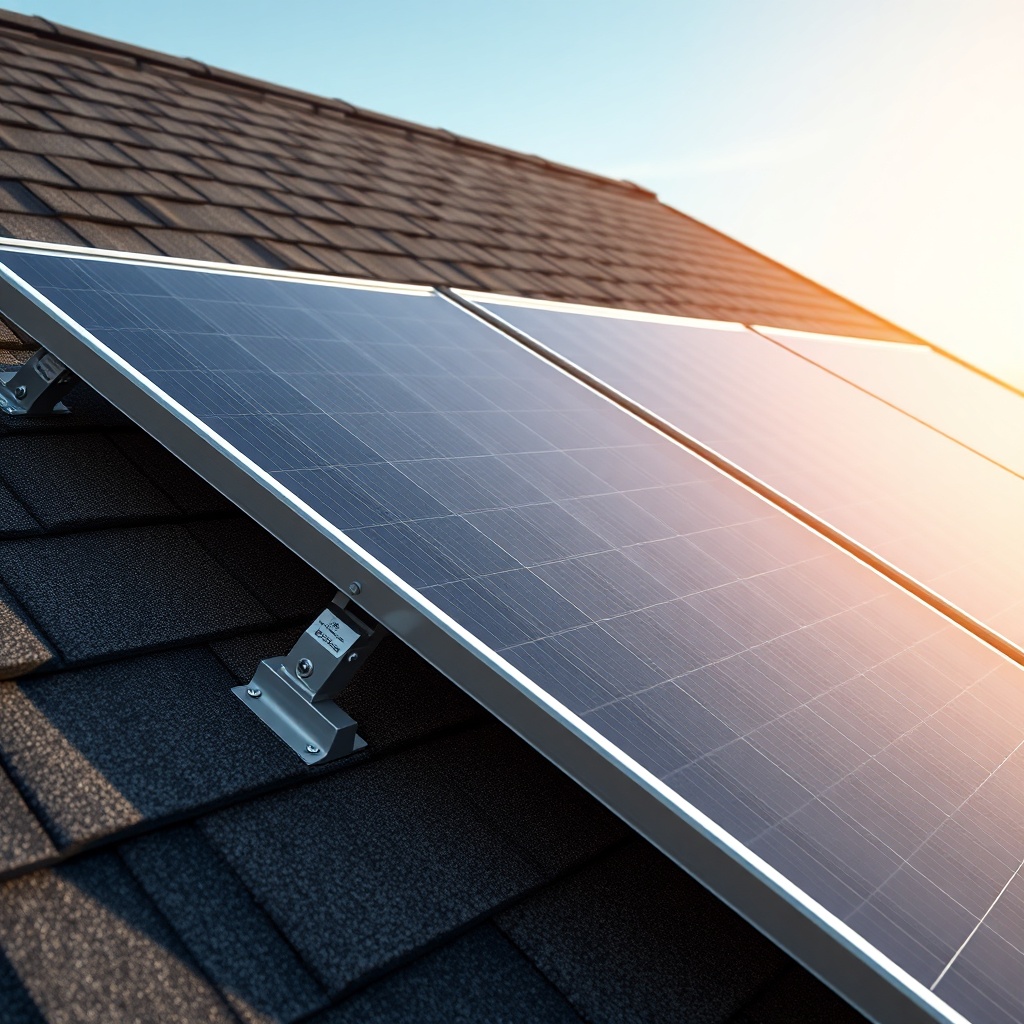
For pitched roofs, south-facing slopes with a 15°-30° pitch are ideal. Each HC-50 panel weighs 16.5 kg empty and around 30 kg when filled with water. On a 150 m² roof, you can fit up to 20 panels (roughly 60 m²) if laid in two rows with 1.5-meter spacing between rows for maintenance access. But steep pitches (over 40°) need extra racking and sometimes structural reinforcement. Always refer to local building codes for snow load and wind uplift calculations.
How Do I Calculate the Return on Investment for HC-50 Panels?
For a typical 12-panel system in a moderate climate, the total installed cost (panels, racking, piping, and labor) ranges from £2,500 to £4,000 GBP (€2,900 to €4,700 EUR) or $3,200 to $5,200 USD. In a 6-month swimming season, such a system can reduce gas or electricity heating bills by 50-70%. Assuming you save £400 (€470, $510) annually on heating costs (for a 75,000-liter pool using a heat pump), the payback period is 6 to 9 years. With the HC-50’s typical lifespan of 15-20 years, that yields a net savings of £3,500 to £8,000 GBP over the life of the system.
To get precise numbers, use the formula: Annual savings (local currency) = (pool volume in liters × 0.001) × (desired temp rise in °C) × (3.8) × (fuel cost per kWh) × (0.5 for solar fraction). For a 75,000-liter pool, a 5°C rise costs roughly £450 GBP annually in gas; solar covers half, saving £225 GBP. Larger arrays improve the solar fraction but increase upfront cost.
What Owners Say
Users consistently praise the Heliocol HC-50 for consistent water temperature even on partly cloudy days. One California homeowner reports a 4°C temperature increase in a 60,000-liter pool with 10 panels, cutting $600 USD per year from their gas bill. Another owner in Scotland with 8 panels notes slower heating in winter but a 3°C boost that extends the swim season by 4 weeks. Common complaints are the need for proper flow balancing—especially when panels are on different roof faces—and the cost of professional installation for complex roof layouts. Most agree the panels are rugged and simple to maintain, with occasional cleaning of debris from the headers.
Frequently Asked Questions
How many Heliocol HC-50 panels do I need for a 20,000-liter pool?
In a warm climate, 3–4 panels (9–12 m²) are sufficient. In moderate climates, use 5–6 panels (15–18 m²).
Can the HC-50 be installed on a flat roof without ballast?
Yes, through-bolt mounting is an option for flat roofs, but ballast is simpler for flat roofs with sufficient structural capacity. See our Flat Roof Mounting Guide for details.
What is the warranty period for the Heliocol HC-50?
Heliocol offers a 10-year limited warranty on the panels and a 2-year warranty on the coupling kits and gaskets.
Do I need a separate controller for the HC-50 system?
Yes, a differential controller is essential to manage pump activation. Our Controller Automation Setup Guide covers installation and programming.
Can I install the HC-50 panels myself?
It is possible, but professional installation is recommended for correct flow balancing, roof sealing, and electrical connections to the controller and pump.
Does the HC-50 work with saltwater pools?
Yes, the polymer panels are corrosion-resistant and compatible with salt water, but ensure the system is flushed annually to prevent mineral buildup in the headers.