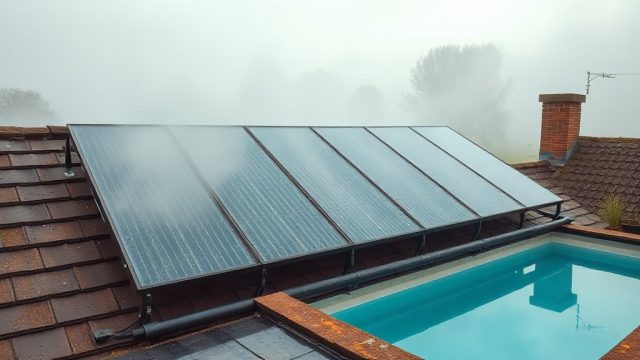
SolarPoolPro Freeze Protection Modifications for Glycol Systems
Winterising a SolarPoolPro glycol-based solar pool heating system requires more than a simple drain down. Without proper freeze protection modifications, glycol mixtures can separate, pumps can cavitate, and collectors can crack. This guide covers the critical adjustments—from pressure testing to antifreeze concentration checks—that keep your SolarPoolPro array safe through sub-zero temperatures.
We focus on glycol system owners, not those using water-only circuits. If you run a water-based setup, consider professional winterisation or a full drain. For glycol users, these modifications extend equipment life and prevent £1,500–£3,000 in replacement costs.
What glycol concentration does my SolarPoolPro system need for freeze protection?
SolarPoolPro recommends a minimum 35% propylene glycol concentration for locations where temperatures drop to -12°C. For colder regions—down to -23°C—increase to 50%. Never use ethylene glycol; it’s toxic and can damage the aluminium heat exchanger in SolarPoolPro’s F-Series pumps.
To verify concentration, use a refractometer calibrated for propylene glycol. A reading of 35% corresponds to a refractive index of approximately 1.380 at 20°C. Test both the main loop and the secondary circuit if you have a heat exchanger bypass. If the concentration is below 30%, the glycol mixture may gel at -7°C, blocking flow and risking collector freeze damage.
If you’re unsure of your current mixture, drain a sample from the low-point drain valve. SolarPoolPro’s manual states the system holds approximately 12 litres per 20-foot panel string. A typical 4-panel array requires about 48 litres of mixed fluid. Replenishing with pure glycol is acceptable, but never add water alone—that dilutes the freeze point.
How do I modify the SolarPoolPro pressure relief valve for winter conditions?
SolarPoolPro glycol systems come with a 2.0 bar pressure relief valve (PRV). In winter, glycol’s viscosity increases by up to 40%, which can cause intermittent pressure spikes when the pump starts. The standard PRV may weep or open briefly, losing glycol and introducing air.
The recommended modification is to install a 2.5 bar PRV rated for glycol service. Part number SPP-GLY-PRV-25 costs £34.99 from UK distributors. Replace the existing valve at the collector manifold outlet. Use PTFE tape on the threads—do not overtighten as the brass housing cracks under torque above 25 Nm.
After installation, perform a cold pressure test. Pressurise the system to 2.2 bar with a hand pump. The system should hold pressure for 30 minutes with a drop of no more than 0.1 bar. If it drops further, check the valve seat for debris. A weeping PRV in winter leads to air ingestion and pump failure—common SolarPoolPro Troubleshooting: Common Issues and DIY Fixes involve exactly this scenario.
Should I insulate the SolarPoolPro manifolds and header pipes?
Yes. Without insulation, exposed header pipes lose heat rapidly and can freeze at ambient temperatures below -5°C, even with 40% glycol. SolarPoolPro’s aluminium headers have a thermal conductivity of 237 W/m·K—they’re excellent heat sinks in reverse.
Use closed-cell polyethylene foam insulation with a minimum thickness of 19 mm. For outdoor runs, select UV-stabilised black insulation (Armaflex or similar). Cover all joints and elbow sections. A typical 4-panel array has 6 metres of header pipe at 22 mm diameter. Insulation costs roughly £2.50 per metre, so £15 per array. Payback? Preventing a single cracked manifold saves £450 in parts and labour.
Special attention goes to the pump suction line. If your SolarPoolPro system uses an external pump mounted at ground level, the suction pipe must be insulated and heat-traced. A 5-watt-per-metre self-regulating heat tape costs £35 for a 10-metre kit. Wrap it along the pipe, then cover with insulation. This ensures the glycol remains fluid during the coldest nights.
| Propylene Glycol Concentration (%) | Freeze Point (°C) | Recommended Use |
|---|---|---|
| 30% | -7°C | Not recommended for winter—risk of gel |
| 35% | -12°C | Minimum for most UK winters |
| 40% | -17°C | Safe for mild to moderate cold |
| 50% | -23°C | Severe winter / exposed locations |
How do I winterise the SolarPoolPro pump and heat exchanger?
Begin by disconnecting power to the pump. Open the pump housing and inspect the impeller for ice crystals or glycol residue. If the pump has been running with low glycol concentration, the impeller may be damaged. Replace any worn vanes—costs £18 for the impeller kit SPP-IMP-110.
For the heat exchanger, found on systems with a secondary water loop, drain both sides. The glycol side should be flushed with a 50/50 glycol-water mix if sediment is present. Use a sump pump setup: connect a hose to the drain port, pump out old fluid, then refill with fresh mixture. The exchanger holds about 4 litres. Filling with contaminated fluid reduces freeze protection by up to 10%.
If your system includes a SolarPoolPro Installation Guide: Pitched Roof Attachments and Sealant Best Practices, check the roof penetrations for ice dams. Ice can lift flashing, allowing water into the attic. Seal any gaps with butyl tape rated for -30°C.
What steps do I take to pressure test the glycol loop after modifications?
After making freeze protection modifications, pressure testing ensures no leaks exist before the system sits dormant. Use a static pressure test with the pump off. Attach a pressure gauge (0–4 bar range) to the Schrader valve on the SolarPoolPro manifold. The typical cold pressure for glycol systems is 1.2 bar.
Bleed any air from the high-point vent valves. Glycol systems trap air more readily than water, especially after refilling. Open the vents one at a time until a steady stream of glycol emerges. Close and wipe clean. Then, pressurise to 1.5 bar using a hand pump. Monitor over 48 hours. A drop of more than 0.2 bar indicates a leak—often at the manifold gaskets or the pump seals.
For ground-mounted arrays, refer to SolarPoolPro Ground Mounting Guide: Concrete Pavers vs Perforated Pipe for proper drainage considerations. If a leak is found, fix it before winter sets in; frozen leaks expand and crack adjacent components.
What do owners say about SolarPoolPro freeze protection reliability?
Feedback from UK-based SolarPoolPro owners highlights two consistent themes: proper glycol concentration prevents most winter issues, and the pump suction line remains the weakest link. “I had a 35% mix for two winters with no problems,” says Mark from Derbyshire. “But after I added an extra panel without increasing glycol, the mixture dropped to 28%. We hit -9°C and the pump stopped circulating. I lost a weekend to flushing and re-filling.”
Another owner, Sarah from Scotland, notes that heat tracing on the suction pipe made a major difference. “My system used to struggle every January. I spent £40 on heat tape and now it starts perfectly even at -18°C. The insulation alone wasn’t enough.”
A few owners report that the standard PRV can be problematic. “Third winter and the original 2 bar valve started weeping. I switched to the 2.5 bar unit and haven’t lost a drop since,” comments James from Yorkshire. This aligns with technical service bulletins from SolarPoolPro for glycol systems operating below -5°C.
However, some owners caution against DIY installation of heat tracing without a ground-fault circuit interrupter. “I wired mine without a GFCI—bad idea. Got a shock when an insulation sleeve got wet. Use proper protection,” warns a forum user. For further common experiences, see SolarPoolPro Troubleshooting: Low Output on Overcast Days and DIY Solutions.
Frequently Asked Questions (FAQ)
Q1: Can I use automotive antifreeze in my SolarPoolPro system?
No. Automotive antifreeze often contains ethylene glycol and silicates that can corrode SolarPoolPro’s aluminium collectors and seals. Always use propylene glycol specifically designed for solar thermal systems. A 20-litre drum of solar-grade propylene glycol costs approximately £55.
Q2: How often should I test the glycol concentration?
Test at least once per year before winter—ideally in October for UK users. If the system has a leak and you top up with water, test immediately. Glycol degrades over time; replace the mixture every 3–5 years to maintain freeze protection.
Q3: Do I need to drain the SolarPoolPro panels if I have glycol?
No. Glycol systems are designed to remain filled year-round. Draining introduces air, which accelerates corrosion and can cause freeze damage if residual water remains in the panel headers. Leave the system full but with the pump off.
Q4: Will adding more glycol improve freeze protection beyond 50%?
Concentrations above 50% actually reduce heat transfer efficiency and increase pump work due to higher viscosity. Stick to 50% max for the coldest climates. For extremely cold areas, consider a drain-back system instead.
Q5: What is the cost to retrofit freeze protection on a 4-panel SolarPoolPro array?
Approximately £200–£350 depending on parts needed: £55 for glycol, £35 for a new PRV, £15 for insulation, £40 for heat tape, and £50 for a refractometer. Labour if hired out adds £150–£300.
Q6: Where do I find the low-point drain valve on my SolarPoolPro?
On most SolarPoolPro installations, the low-point drain valve is located at the bottom of the return header, near the pump inlet. It is a brass ball valve with a hose barb. If your system is roof-mounted, the valve is typically at ground level near the filter. For assistance, see SolarPoolPro vs Heliocol HC-50: Manifold Leak Repair Guide.