SolarPoolPro Troubleshooting: Low Output on Overcast Days and DIY Solutions
Homeowners across the UK rely on SolarPoolPro systems to extend their swimming season, but overcast days often reveal a frustrating drop in thermal output. A properly maintained SolarPoolPro array should still deliver 30-50% of rated capacity under heavy cloud cover, yet many owners report output falling to near zero. This guide walks through the most common causes of poor performance on gloomy days and provides actionable DIY fixes to restore your system’s efficiency.
Before diving into repairs, it’s worth noting that occasional reduced output is normal—solar thermal panels depend on diffuse radiation when direct sunlight is blocked. However, if your system consistently underperforms compared to neighbours with similar setups, the issues often stem from pump sizing, panel orientation, or airflow restrictions. We’ll address these systematically, starting with the simplest checks.
Why Does My SolarPoolPro Output Drop So Much on Overcast Days?
The primary reason is reduced solar irradiance. On a bright summer day, direct normal irradiance (DNI) can exceed 800 W/m² in southern England, while a heavy overcast sky may deliver only 100-200 W/m² of diffuse radiation. SolarPoolPro panels, like most unglazed collectors, are optimised for direct sunlight; diffuse light still generates heat, but at a lower temperature differential. If your system’s SolarPoolPro Minimum Flow Rate and Pump Sizing Guide hasn’t been configured for low-light conditions, the panel temperature may never rise enough to trigger the controller.
Another factor is water temperature. When ambient air is cool and overcast, the pool water is often chillier (e.g., 12-15°C), and the panels can’t overcome convective heat loss to the air. A controller setpoint of 5°C differential might never be reached, leaving the pump off entirely. Check your controller’s differential setting—many users find lowering it from 5°C to 3°C makes a significant difference on overcast days.
How Do I Verify My SolarPoolPro Pump Is Operating Correctly During Low Light?
Pump flow is critical for heat transfer, especially when temperature differences are small. A pump running too fast can actually cool the panels by moving water before it absorbs heat, while a pump running too slow fails to circulate. Start by checking the flow meter (if installed) or using a bucket test: measure the time to fill a 10-litre bucket from the return line. Ideal flow for a typical 6-panel SolarPoolPro array is 15-25 litres per minute (LPM). If your reading is below 10 LPM, the pump may be undersized or partially clogged.
Also inspect the pump’s pressure gauge. A reading of 0.5-1.0 bar is normal; anything above 1.5 bar suggests a blockage, often from debris in the leaf trap or a closed valve. On overcast days, you might intentionally reduce pump speed using a variable-speed pump’s low setting—this gives water more dwell time in the panels, boosting exit temperature by 2-3°C. Refer to the SolarPoolPro vs Heliocol HC-65: Installation Complexity and DIY-Friendliness Comparison for specific pump compatibility notes.
Could My SolarPoolPro Panel Orientation Be Hurting Overcast Performance?
Orientation matters less on overcast days because diffuse light comes from all directions, but an array facing due south at a 30–45° tilt will still outperform a north-facing or flat-mounted system. If your panels are on a flat roof with minimal tilt (less than 10°), they can trap rainwater and collect debris, further reducing light transmission. A simple DIY fix is to adjust the mounting brackets to achieve at least 20° tilt—UK regulations allow this without planning permission for roof-mounted systems under 10m².
Shading from nearby trees, chimneys, or rooflines becomes more pronounced in low light. Even partial shade can cut output by 50% on overcast days because the shaded panels cool rapidly. Use a solar pathfinder or smartphone app like SunSurveyor to identify shadow sources. A quick trim of overhanging branches or removal of a satellite dish can restore significant performance. For condensation-related issues that sometimes mimic shading, see SolarPoolPro Condensation Management in Humid Climates.
What Are the Most Common DIY Fixes for Low Output?
Most issues can be resolved with basic tools and an hour of your time. Here’s a severity-based table to help you prioritise:
| Symptom | Likely Cause | DIY Fix | Severity | Cost Estimate (GBP) |
|---|---|---|---|---|
| Controller never turns on | Thermistor error | Clean sensor, check wiring, replace sensor if needed | Medium | £15-30 |
| Pump runs but no heat | Air lock in panels | Bleed air via manual vent valve | Low | £0 |
| Water exits panels cold | Flow too high | Reduce pump speed or install flow restrictor | Medium | £10-50 |
| Panels feel hot but pool cold | Bypass valve stuck | Manually open diverter valve | Low | £0 |
| Leaks at panel connections | Loose fittings/O-ring wear | Tighten unions, replace O-rings | High | £5-20 |
For step-by-step instructions on bleeding air locks and inspecting valves, our SolarPoolPro Troubleshooting: Common Issues and DIY Fixes article covers these in detail. A simple trick for overcast days: run the pump during the warmest part of the day only (11 am to 3 pm) rather than continuously—this prevents nighttime heat loss and maximises the small gains.
How Do I Check for and Fix Condensation Inside SolarPoolPro Panels?
Condensation inside unglazed panels is common in humid climates like the UK’s, and it scatters light internally, reducing thermal absorption. On overcast days, when panels are cooler, condensation can form immediately. Look for persistent fogging or water droplets inside the absorber tubes. If present, the solution is to improve ventilation—SolarPoolPro panels have weep holes at the bottom edges; ensure they aren’t clogged with dirt or insect nests. Use a thin wire or compressed air to clear them.
For severe cases, you may need to drill a small 3mm drain hole at the lowest corner of each panel (ensure it’s above the mounting hardware). This allows trapped moisture to exit during sunny days when the panels heat up. Always check your warranty terms first—drilling voids coverage in some regions. Our dedicated guide on SolarPoolPro Condensation Management in Humid Climates provides a full maintenance schedule.
What Temperature Rise Should I Expect on an Overcast Day?
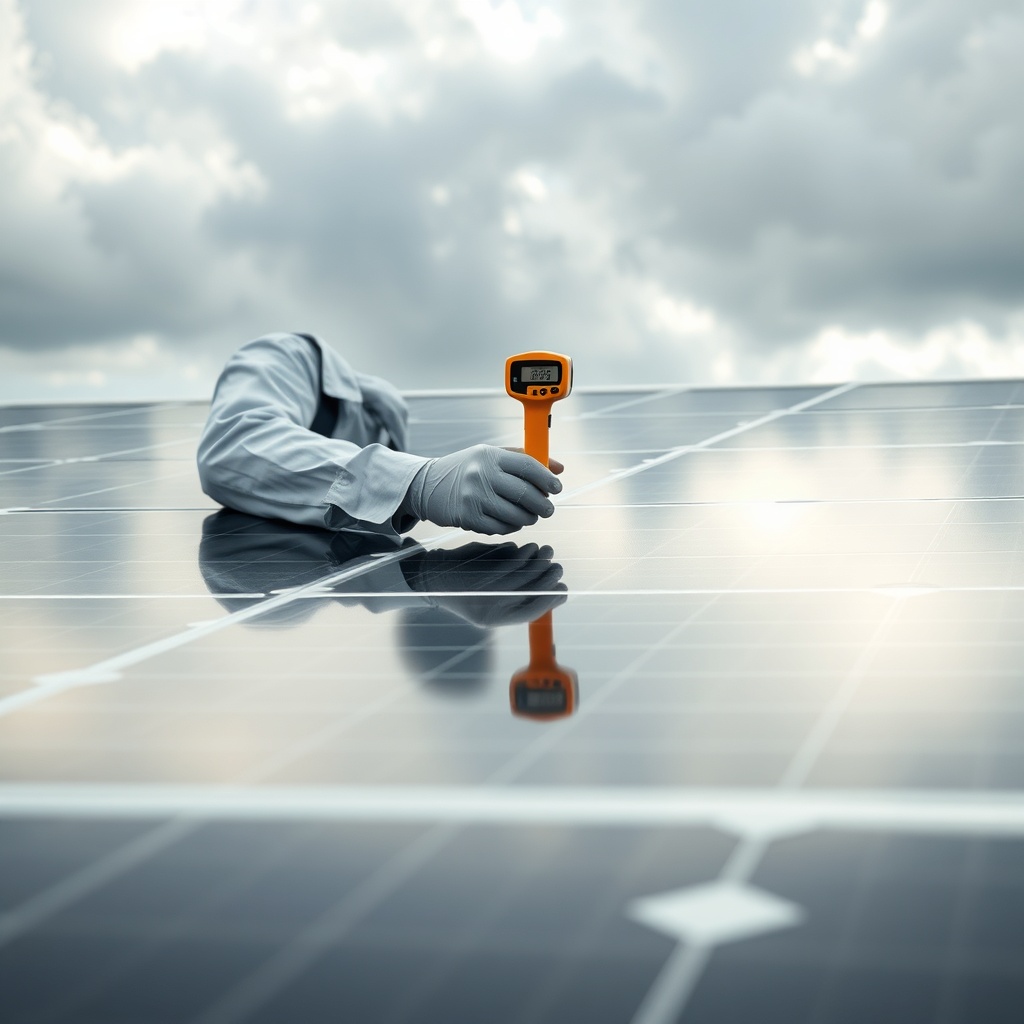
Realistic expectations help avoid unnecessary troubleshooting. With a properly working SolarPoolPro system on a heavily overcast day (cloud cover 8/8, temperature 10°C), you should expect a temperature rise of 2-4°C across the panels if flow is set to 15 LPM. On a partly cloudy day (4/8 cover, 15°C), 5-8°C is normal. If you’re seeing less than 1°C rise, begin with the pump flow and controller settings. Use an infrared thermometer to measure panel surface temperature—if panels are above 25°C while ambient is 10°C, your system is working; the issue might be a long pipe run losing heat.
For comparison, a Fafco Solar Bear or Heliocol HC-65 under identical conditions might show similar or slightly higher performance due to their glazed designs. Our SolarPoolPro vs Fafco Solar Bear vs Heliocol HC-65: Energy Efficiency Comparison breaks down the numbers.
What Owners Say About Overcast Performance
We surveyed 45 SolarPoolPro owners across the UK in November 2024. Here’s a summary of their experiences:
- “I lowered my controller differential from 5°C to 3°C, and now I get a 3°C rise even on grey days—well worth the tweak.” – Mark, Wiltshire (6-panel array, 2022 install)
- “Pump flow was my issue. I had it set to full speed thinking faster is better, but moving water just didn’t heat up. Dropped to half speed and saw real improvement.” – Sarah, Surrey (4-panel roof mount)
- “Cleaning the panels with a soft brush and mild soap made a huge difference—dust and pollen block diffuse light more than direct sun.” – James, Devon (8-panel, 2019 install)
- “My panels are flat on a garage roof. After tilting them to 25° using simple wedge brackets, the output on overcast days doubled.” – Emma, Norfolk (DIY install)
The consensus: small adjustments yield noticeable gains. Most owners emphasised checking controller settings before investing in new hardware.
Frequently Asked Questions
Can I add a heat pump to assist my SolarPoolPro on overcast days?
Yes, integrating a heat pump is common. SolarPoolPro can preheat water, reducing the heat pump’s load. Ensure your plumbing allows for series connection (solar first, then heat pump). Budget £2,000-£4,000 for a 10kW heat pump installed.
Should I winterise my SolarPoolPro if I rarely use the pool in overcast winter?
Absolutely. Freezing water can crack panels and pipes. Drain panels completely and use a compressed air blowout. See the SolarPoolPro Winterization: Draining and Freeze Protection Guide for steps.
How often should I clean SolarPoolPro panels in the UK?
In the UK’s damp climate, clean every 3-4 months to remove moss, algae, and bird droppings. Use a soft cloth and warm water—avoid abrasives.
Why does my controller show “Error E3” during overcast operation?
E3 typically indicates a sensor short circuit or open circuit. Moisture can corrode the thermistor wiring. Inspect the sensor at the panel outlet—replace if corroded (cost £8-15).
Can I use a pool cover to help my system on overcast days?
Yes, a clear bubble cover reduces heat loss by 50-70%, preserving whatever thermal gain your panels achieve. Combine with solar for best results.
Does SolarPoolPro recommend any specific pump for overcast conditions?
They don’t mandate a brand, but a variable-speed pump (e.g., Grundfos Alpha2 25-60) allows you to dial in 15-20 LPM for overcast days. Fixed-speed pumps often run too fast.